
 Home › Archive
Articles Archive
See all articles and discover more interesting topics!
 Vyfiltrujte články:

After fifteen years, Orbán may be replaced by the opposition. In many ways, however, they are similar.

 21. 11. 2025 v 09:57
Hungary is heading toward what may be its most consequential election since the fall of communism. After fifteen years in power, Viktor Orbán faces his strongest challenger yet—Péter Magyar and the TISZA party, which now leads independent polls and appeals across regions and generations. The upcoming vote may reshape the country’s democratic trajectory and its relationship with the EU. The article was commented on by Oszkár Roginer-Hofmeister, Head of the Global Europe Programme.

Europa Cinema: Generation Euromajdan | Screening and Debate
18. 11. 2025 v 16:30A film crew has been following Mustafa Nayyem, Svitlana Zalishchuk, and Serhiy Leshchenko since 2013, documenting their fight for democracy in Ukraine. Over the years captured on film, they underwent a major shift in their roles, moving from activism into high-level politics.

Public Recording of the Café Evropa Podcast: Europe, my homeland
17. 11. 2025 v 15:02We would like to invite you to a public recording of the Café Evropa podcast. This time we'll talk about what modern patriotism looks like today and how citizens’ relationship with their own country is changing in a globalized world.

Report | Multiannual Financial Framework (MFF) - Challenges and Opportunities
17. 11. 2025 v 14:01Multiannual Financial Framework (MFF) – Challenges and Opportunities, co-organized on November 17th, 2025, by the Brussels Office of the EUROPEUM Institute, the International Visegrad Fund, and the Slovak Permanent Representation to the EU, opened with reflections on 17 November—a symbolic date for Central Europe marking the pursuit of freedom, democracy, and systemic transformation. The conference brought together policymakers and experts to discuss the key strategic priorities of the forthcoming Multiannual Financial Framework (MFF) 2028–2034. The event offered an in-depth examination of issues including competitiveness, cohesion policy, innovation, and funding for science. It also underscored the importance of the EU budget in supporting Ukraine’s recovery and integration.
Seznam Zprávy | Babiš as the master of foreign affairs. Why the prime minister wants to run diplomacy himself
16. 11. 2025 v 11:22In the new Babiš government, European policy will be moved directly under the prime minister, reducing the influence of the Ministry of Foreign Affairs. However, the Permanent Representation in Brussels will remain essential, especially through close cooperation with the Government’s Section for European Affairs. Key personnel decisions are still being negotiated, including who will serve as the prime minister’s chief coordinator, or “sherpa,” for EU matters. The article was commented on by Martin Vokálek, Executive Director and Head of the Brussels Office at EUROPEUM.
Foresight | Stalemate in Hungarian Politics: An opposition unable to break through, and a ruling party whose “enemy-creating, denial-driven” narrative no longer resonates with the public
15. 11. 2025 v 11:50With six months to go until the 2026 Hungarian parliamentary elections, the political landscape is entering a decisive period. The emerging conservative Tisza party, led by Péter Magyar, continues to challenge the long-standing rule of Viktor Orbán and Fidesz, maintaining strong polling numbers. While Tisza has been effective in shaping the political agenda, Fidesz is attempting to counter with an intensified media strategy and its traditional “enemy-focused” narrative. Support for both sides appears to be stabilizing, leaving the outcome uncertain as the campaign accelerates ahead of April’s vote. The article was written by Yusuke Ishikawa, a non-resident fellow at EUROPEUM.
Transatlantic After Hours: Next Gen in Spotlight?
14. 11. 2025 v 10:00A series of six evening meetings during the fall of 2025 (in the week beginning November 10) will allow students to discuss a wide range of topics with experts from among current and former Brussels officials, ambassadors, Czech and European political experts and decision-makers, journalists, and commentators.
Seznam Zprávy | A train full of free-riders. States are failing to meet climate targets, and the damages will keep increasing
14. 11. 2025 v 09:56The world is pouring huge amounts of money into reducing emissions, yet most countries still fail to meet the Paris Agreement, and global warming continues. While some emissions have plateaued, climate-related damages are rising, and the “free-rider” problem persists as states benefit from inaction. Geopolitical factors, especially the shifting climate policies of China and the United States, further complicate progress. For Seznam Zprávy, the article was commented on by Filip Křenek, analyst at the EUROPEUM Institute.
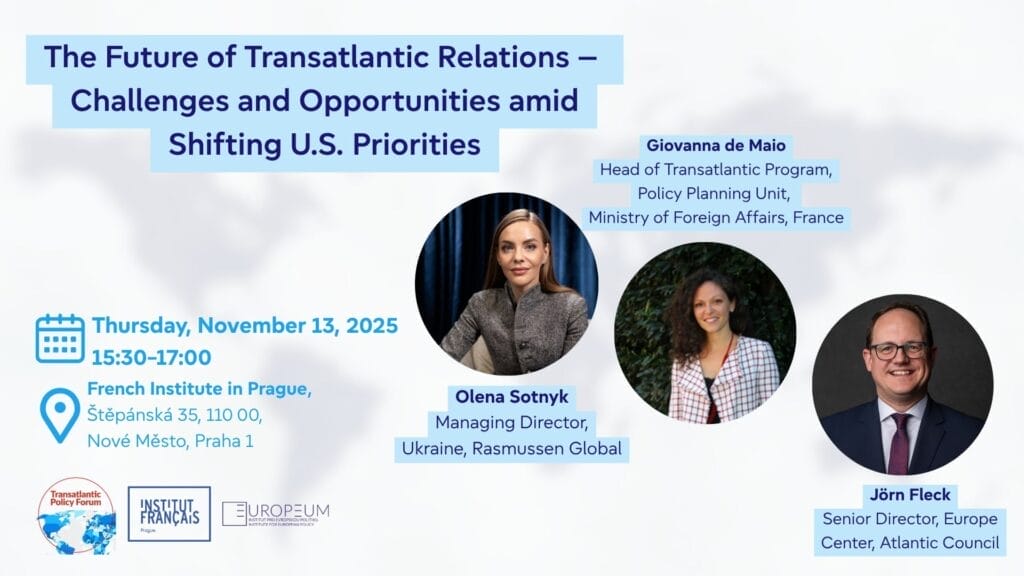
The Future of Transatlantic Relations - Challenges and Opportunities amid Shifting U.S. Priorities
13. 11. 2025 v 15:30The EUROPEUM Institute for European Policy invites you to a public discussion on the future of transatlantic relations and Europe’s role in a rapidly changing global environment. Join us as leading experts explore how shifting U.S. priorities are reshaping cooperation and what this means for Europe, including Central and Eastern European partners.
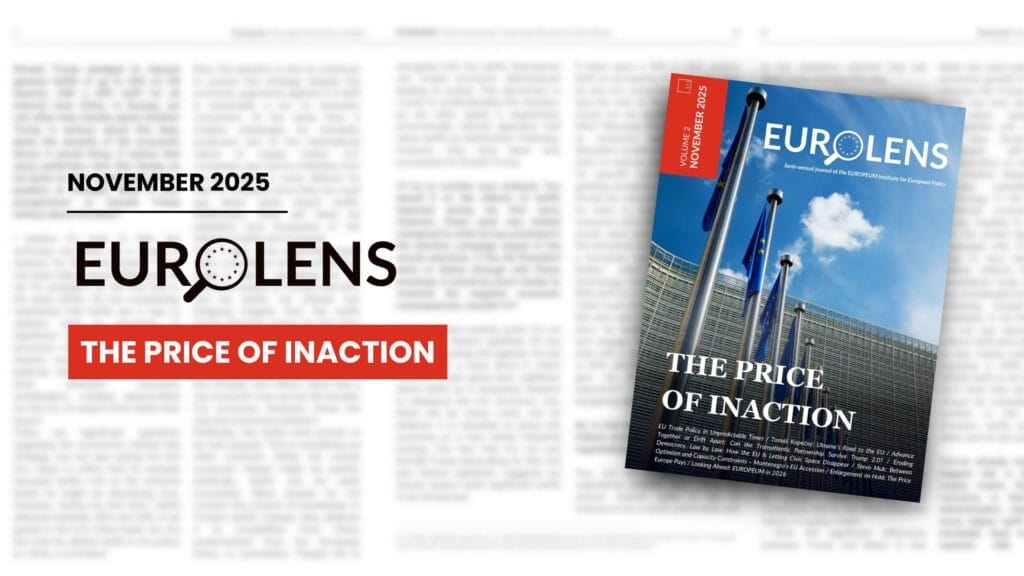
EuroLens Journal #2: The Price of Inaction
13. 11. 2025 v 14:03And here it is – the second edition of our EuroLens journal! Building on the success of the first issue, this new edition once again offers interviews with experts, commentaries, and articles on both political and non-political topics. You will also find an overview of upcoming events, conferences, and much more. We hope it will serve as an interesting and inspiring source of information and support your work.

An ambitious EU: How to finance the budget? What’s new in the European Parliament?
12. 11. 2025 v 17:00We invite you to another debate in our series, offering an up-to-date perspective on key topics discussed during the plenary sessions of the European Parliament.
iROZHLAS | Vokálek: Czechia should have the right to a full exemption from the solidarity contribution
12. 11. 2025 v 10:52Czechia plans to request a full exemption from solidarity contributions under the EU migration pact after being classified as a country facing a “significant migration situation.” According to Martin Vokálek, the country is likely to obtain the exemption due to the high number of Ukrainian refugees it hosts. EU member states will make the final decision at the December summit. The article was commented on by Martin Vokálek, Executive Director and Head of the Brussels Office at EUROPEUM.