
 Home › Archive
Articles Archive
See all articles and discover more interesting topics!
 Vyfiltrujte články:


Babiš played for time. A conflict of interest even prevented him from attending a key summit

 5. 12. 2025 v 11:04
Andrej Babiš is seeking to attend the December European Council summit in Brussels, which would mark his symbolic return to the European political stage. The summit represents an important personal and political test of how European leaders will receive him after his comeback. The article was commented by Martin Vokálek, Executive Director and Head of the Brussels Office of the EUROPEUM Institute.

Blog | Israel on Center Stage: Eurovision, Politics, and the Fight for Neutrality
4. 12. 2025 v 16:37Even though the vote on Israel’s participation in Eurovision 2026 has already taken place — and some countries are now stepping back from the contest — the core dilemma remains unchanged. This piece breaks down how Eurovision found itself at the center of global politics — and why the debate over Israel is only one chapter in a longer struggle over neutrality, reputation, and the future of the contest. Perfect for anyone trying to make sense of what’s unfolding now.
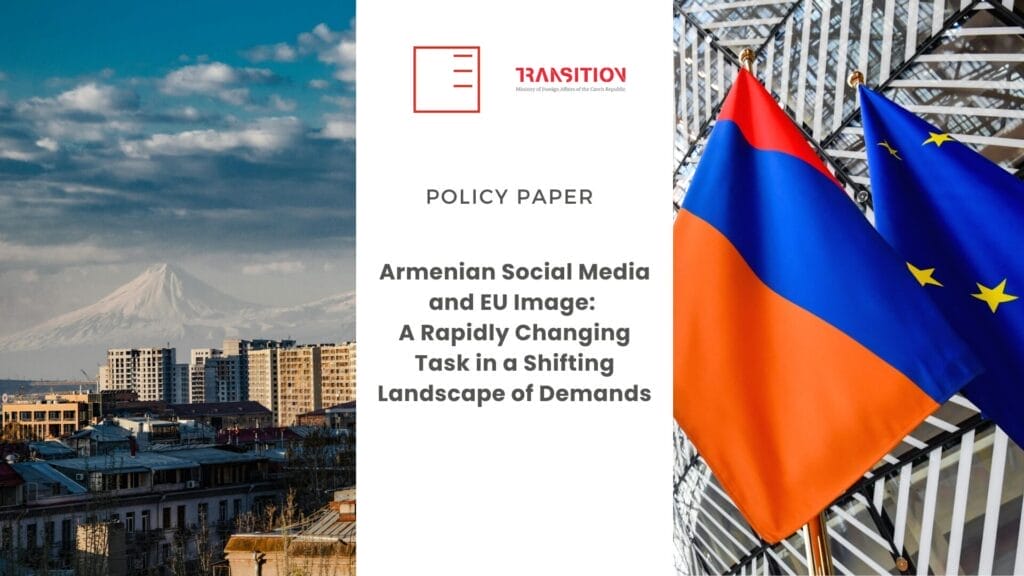
Policy Paper | Armenian Social Media and EU Image: A Rapidly Changing Task in a Shifting Landscape of Demands
4. 12. 2025 v 10:59This policy paper explores how the image of the European Union is shaped on Armenian social media amid growing political uncertainty and shifting expectations. It analyses key online narratives and actors, as well as the tension between hopes invested in the EU and frustration over limited outcomes in a rapidly changing geopolitical environment.

Emission permits will hurt. The government has chosen to keep quiet about it, an analyst criticizes. He says they cannot be scrapped
3. 12. 2025 v 10:00The new ETS2 emissions trading system will gradually increase the cost of fossil fuels for households and transport. While no immediate price shock is expected, higher long-term costs and a transition to cleaner energy sources will be unavoidable. European funds will play a key role in helping households prepare for this change. The podcast was commented on by Viktor Daněk, Deputy Executive Director and Head of the Prague Office of the EUROPEUM Institute.

Low-emission materials for the Czech automotive industry
2. 12. 2025 v 14:43The Low Emission Materials for the Czech Automotive Industry project is the fifth EUROPEUM project aimed at decarbonising the Czech automotive industry. The aim of the project for 2024/2025 is to improve understanding of material flows and regulatory barriers in the automotive sector; to transfer best practices from the international context to the Czech environment; and to identify key areas of Czech and European policies that need to be improved to enable the automotive industry to meet the challenges of decarbonisation and remain competitive.

“From drowning to rescuer”: the secrets of Škoda, Volkswagen’s Czech engine
2. 12. 2025 v 10:29Škoda Auto has become a key growth engine of the Volkswagen Group, posting strong sales growth and successfully transforming its brand image. Its performance in electric vehicles and its strong position in Europe highlight the company’s strategic importance. The article was commented on by Filip Křenek, analyst at the EUROPEUM Institute.
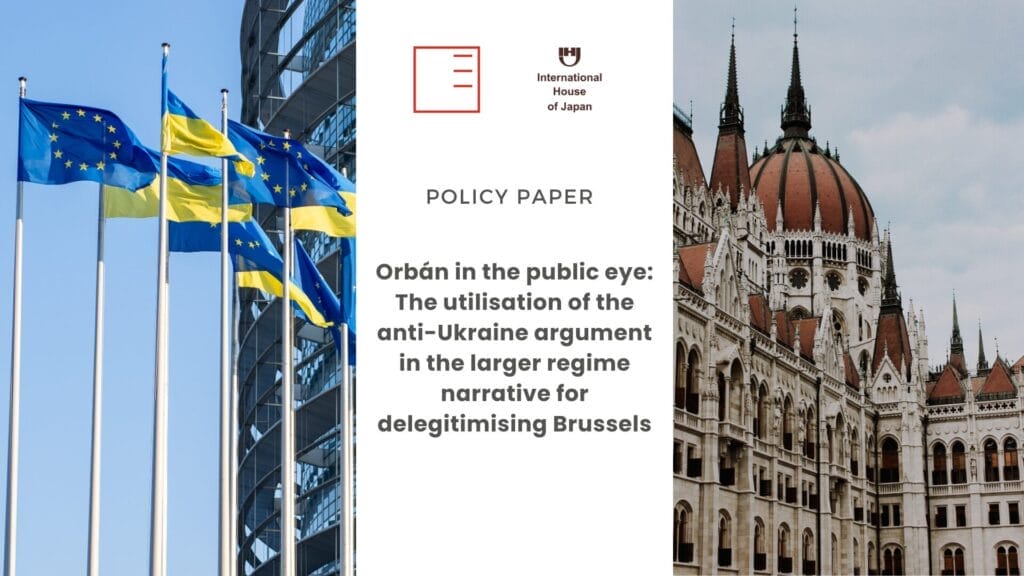
Policy Paper | Orbán in the public eye: The utilisation of the anti-Ukraine argument in the larger regime narrative for delegitimising Brussels
1. 12. 2025 v 18:18This policy paper examines how Ukraine’s prospective EU accession has been turned into a tool of domestic political mobilisation in Hungary. It traces how Viktor Orbán and government communication frame Ukraine as a threat and embed the issue into a broader anti-Brussels narrative built on fears of war, loss of sovereignty, and “foreign values” in the run-up to the 2026 elections.

Ambition vs. Reality: What Will the EU’s 2040 Climate Targets Bring?
1. 12. 2025 v 17:00Join us on 1 December for a debate from the series “What’s New in the European Parliament?”, where this time we will focus on the EU’s 2040 climate targets.

Final report | The platform Revolution : Shaping the Fair Future of Platform Work in the EU and Western Balkans
1. 12. 2025 v 14:35Platform work in the V4 and Western Balkans is rapidly expanding but remains weakly regulated, creating risks for workers and social systems. Authored by Silke Maes, a research fellow at the EUROPEUM Institute for European Policy, and financed by Stiftung Mercator, this final report calls for region-specific reforms to strengthen legal frameworks, enforcement, worker protection, and data collection, supported by broader cooperation at national and EU levels.
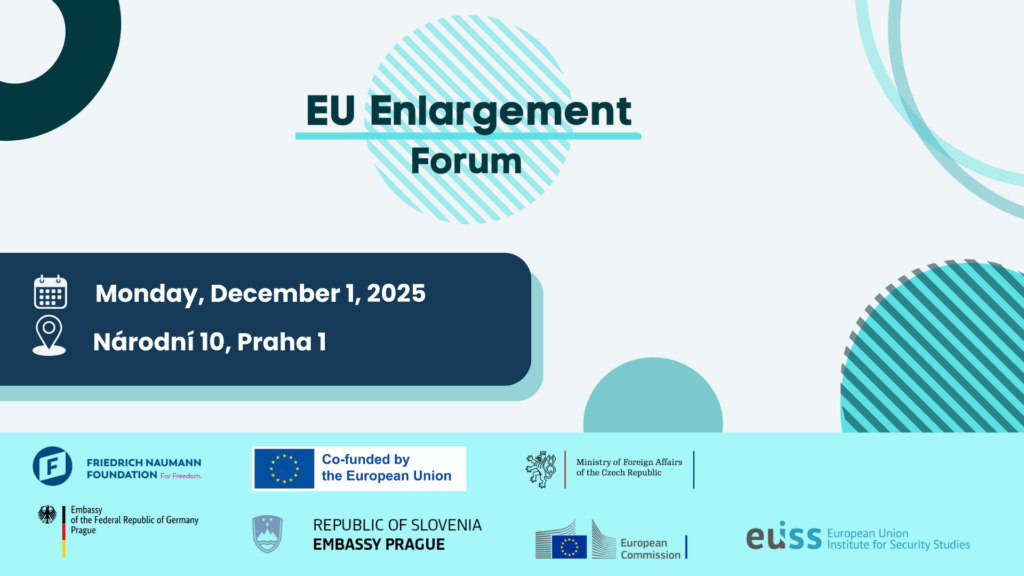
EU Enlargement Forum 2025
1. 12. 2025 v 14:30We warmly invite you to Monday’s programme of the Enlargement Forum conference, featuring a series of discussions on the lessons of past EU enlargements, the role of women in accession processes, and the importance of reconciliation in European integration.

Aktuálně.cz | “The time has come for the Patriots.” Babiš’s major triumph has strengthened his allies in the European Parliament
1. 12. 2025 v 10:31The electoral success of Babiš’s ANO movement in the Czech Republic prompted a strong reaction from its partners in the European Parliament. The Patriots for Europe group, which ANO has been part of since last year, portrayed it as evidence of the growing support for this faction across the European Union. Martin Vokálek, Executive Director and Head of the Brussels Office of the EUROPEUM Institute, commented for Aktuálně.cz.

Policy paper | Transatlantic reality check: embracing the new norm
30. 11. 2025 v 10:11The analysis assesses the evolution of transatlantic relations in 2025 in the context of Donald Trump’s return to office and changes in the U.S. approach to security guarantees. It examines the implications of these shifts for European security, collective defence, strategic autonomy, and the resilience of democratic institutions. The text also addresses issues of geopolitical stability in the Arctic and the MENA region, as well as climate and energy policy, trade relations, and technological competitiveness. Drawing on discussions from the Transatlantic Policy Forum, it formulates key recommendations for strengthening transatlantic cooperation in the areas of security, the economy, and strategic coordination.