
 Home › Archive
Articles Archive
See all articles and discover more interesting topics!
 Vyfiltrujte články:


Téma.21 | The West has already explained to Babiš how valuable the Czech ammunition initiative is, says analyst Daněk

 28. 11. 2025 v 17:00
When can Europe play a more prominent role in ending Russia’s war in Ukraine, how does Poland’s defense strategy serve as an example, and why do some Slovaks view Russia more favorably than Ukraine? Viktor Daněk, Deputy Executive Director and Head of the Prague Office of the EUROPEUM Institute, answers these questions.
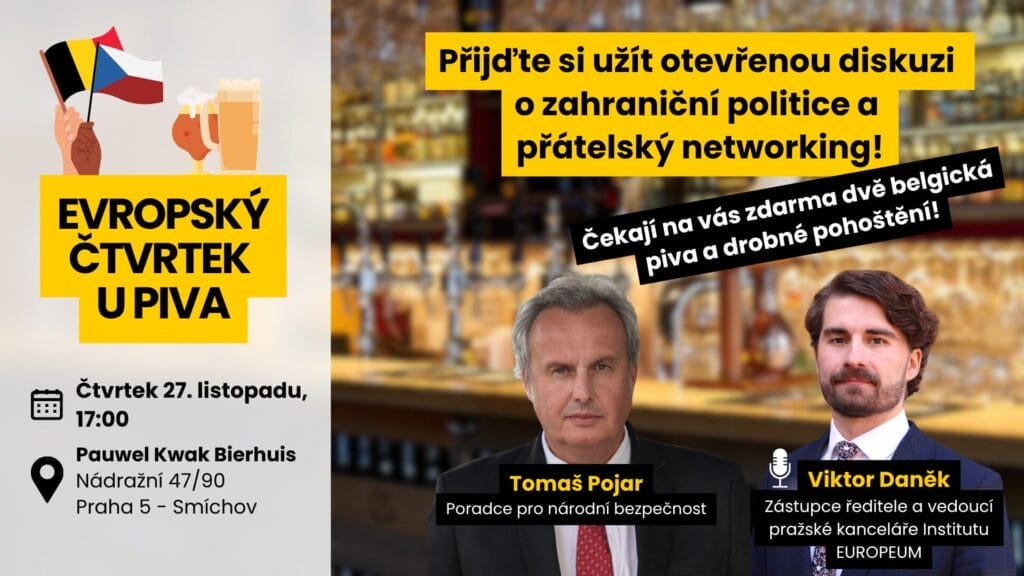
European Thursday over a Beer
27. 11. 2025 v 17:00Come join us on 27 November at Pauwel Kwak Bierhuis for an informal discussion on foreign policy as well as current European and security issues with Tomáš Pojar and Viktor Daněk. You can look forward to an open debate, a friendly atmosphere, and—on top of that—two Belgian beers and light refreshments on the house.

ČT24 | The Patriots have begun to break through the European isolation
27. 11. 2025 v 14:46For the first time in a long while, the European People’s Party supported a key vote with the help of the Patriots, once again disrupting the traditional cordon sanitaire toward populists and the far right. Yet according to expert Viktor Daněk, the isolation is not over — socialists and liberals want to continue cooperating with the EPP, though they describe their relationship as a “toxic marriage.” The commentary for ČT24 was provided by Viktor Daněk, Deputy Executive Director and Head of the Prague Office of the EUROPEUM Institute.
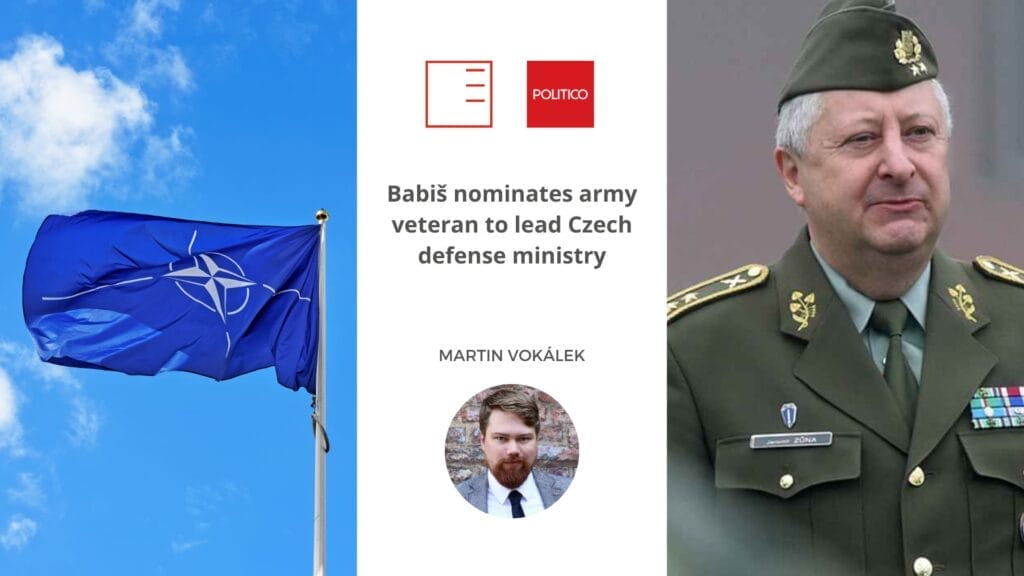
Politico | Babiš nominates army veteran to lead Czech defense ministry
26. 11. 2025 v 18:48The nomination of retired Lt. Gen. Jaromír Zůna as defense minister signals stability in Czech defense policy despite the far-right SPD gaining control of the ministry. His stance toward NATO offers reassurance, though the government’s direction will depend on his cooperation with SPD deputy Radovan Vích and Prime Minister Babiš’s influence. Martin Vokálek, Executive Director and Head of the Brussels Office of the EUROPEUM Institute, commented for Politico.

ČT24 | EU member states have backed ‘Chat Control 2.0’
26. 11. 2025 v 15:21EU countries have agreed on a proposal aimed at curbing the spread of online material depicting child sexual abuse, despite the Czech Republic voting against it. The proposal allows companies to voluntarily break encrypted communication in order to prevent the dissemination of harmful content. The final wording will still need to be negotiated with the European Parliament. The issue was commented on for ČT24 by Viktor Daněk, Deputy Executive Director and Head of the Prague Office of the EUROPEUM Institute.
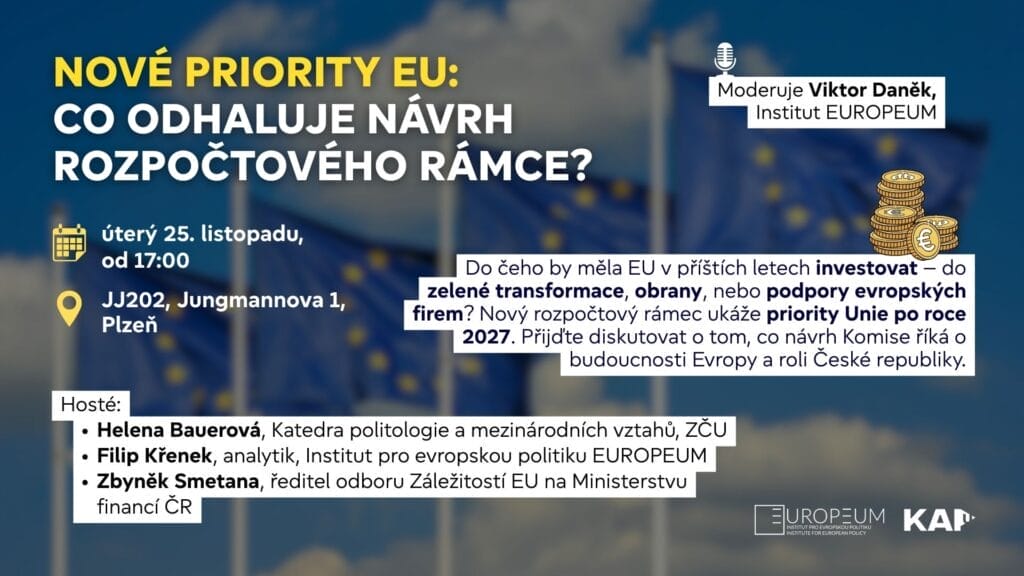
New EU Priorities: What Does the Proposed Budgetary Framework Reveal?
25. 11. 2025 v 17:00We invite you to a debate in Plzeň on what the EU’s new budget proposal reveals about the Union’s future priorities and the role the Czech Republic may play in them.

Cinema Europa: Drenched in Oil | Screening with Discussion
25. 11. 2025 v 16:30We cordially invite you to the screening of the film Drenched in Oil (2022), which will be followed by a discussion with our guests.
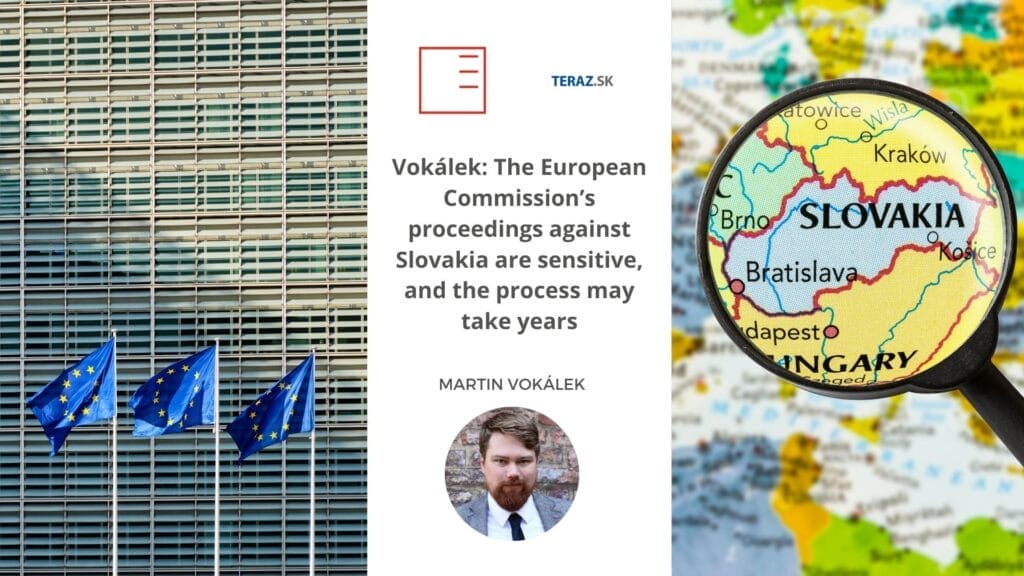
Vokálek: The European Commission’s proceedings against Slovakia are sensitive, and the process may take years
21. 11. 2025 v 14:29The European Commission has launched an infringement procedure against Slovakia over its recent constitutional amendment, arguing it undermines the principles of EU legal primacy and uniform application of EU law. The dispute may last years and is politically sensitive, with the Slovak government presenting it as a defense of national identity, while the EU stresses compliance with member-state obligations.
This article was commented on by Martin Vokálek, Executive Director and Head of the Brussels Office of the EUROPEUM Institute.

Policy Paper | Enforcement of the EU Regulation on Forced Labour and Systemic Risks of Forced Labour in Xinjiang
21. 11. 2025 v 12:44Na konci listopadu 2024 učinil Evropský parlament významný krok, když přijal nařízení 2024/3015, které zakazuje uvádění výrobků vyrobených za použití nucené práce na trh EU. Tento zákaz, jenž vstoupí v platnost v prosinci 2027, se vztahuje na celý dodavatelský řetězec. Vymáhání nařízení bude probíhat prostřednictvím vnitrostátních orgánů členských států a Evropské komise v případech mimo území EU.
Ačkoli má opatření globální rozsah, čelí celé řadě výzev – zejména v souvislosti se Sin-ťiangem. Praktiky nucené práce v tomto regionu byly opakovaně zdokumentovány a potvrzeny jak Mezinárodní organizací práce (ILO), tak Organizací spojených národů (OSN). Zároveň je Sin-ťiang klíčovým dodavatelem solárních panelů, kritických surovin, hliníku, PVC a bavlny, přičemž nucená práce zde často probíhá formou státem organizované mobilizace mimo detenční zařízení, což její odhalení výrazně ztěžuje.
Jak upozorňuje Jan Švec, výzkumný pracovník Ústavu mezinárodních vztahů v Praze, prosazování tohoto nařízení bude představovat jeden z nejsložitějších úkolů obchodní politiky EU.

Policy Brief | Cleavage Formation in the European Parliament and the Implications for EU Politics and the Democratic Deficit
21. 11. 2025 v 12:17In 2009, Liesbet Hooghe and Gary Marks argued that public opinion in the European Union had shifted from permissive consensus to constraining dissensus, giving mass politics a stronger role in integration than traditional theories assumed. This sparked debate about the EU’s democratic deficit – a contested concept, but one with real political effects. The gap between citizens and EU institutions has long been visible in European Parliament elections, traditionally seen as “second-order” contests with low turnout and protest voting. However, the 2019 and especially the 2024 elections broke with this pattern: turnout increased, EU issues became more politicised, and party positions more polarised. These shifts suggest that a new transnational cleavage is emerging, marking a turning point for democratic engagement in the EU, writes Csaba Stefán, a Research Fellow at the Hungarian Institute of International Affairs, in his policy brief.

Background Paper and Recommendations of the National Convention on the EU | Czechia and the Social Dimension of Competitiveness in Light of the Draghi Report
21. 11. 2025 v 11:31How can the Czech Republic strengthen its competitiveness without undermining social cohesion? This question was at the centre of the roundtable of the National Convention on the EU, held on 21 November 2025 and focused on the role of the social dimension in the context of the Draghi Report. The discussion explored the sustainability of the European social model and examined which EU instruments the Czech Republic could use to support its economic, social, and regional development. The background paper and recommendations on this topic were prepared by Klára Votavová and Carlos Gómez del Tronco.
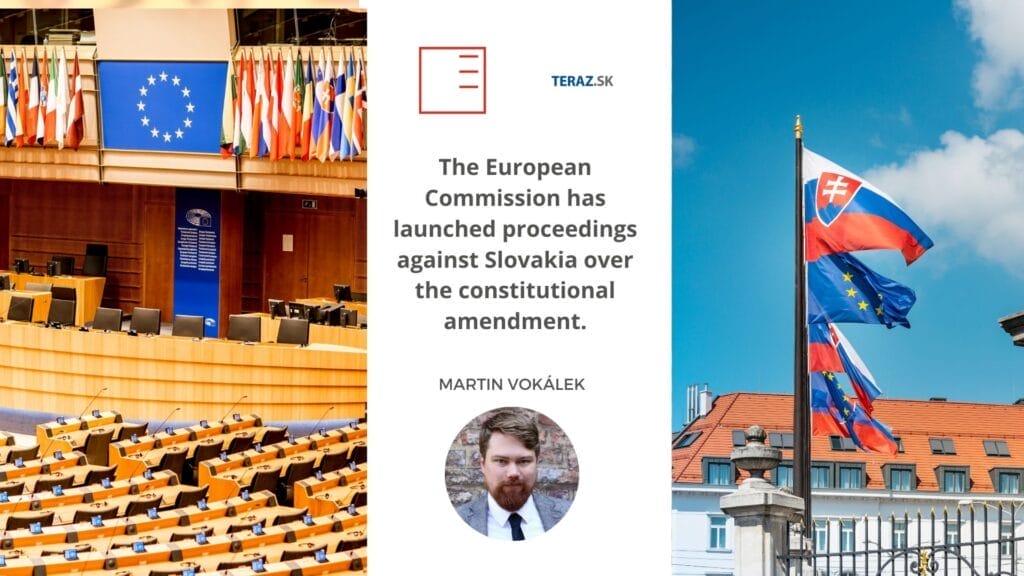
The European Commission has launched proceedings against Slovakia over the constitutional amendment.
21. 11. 2025 v 11:31The European Commission has launched infringement proceedings against Slovakia over a recent constitutional amendment that, in its view, undermines the primacy and uniform application of EU law. Slovakia has two months to respond. If no remedy follows, the case may advance to the EU Court of Justice, potentially leading to sanctions and reputational consequences. The process may take years, which is why the Commission prefers dialogue first. Commented by Martin Vokálek, Executive Director and Head of the Brussels Office of the EUROPEUM Institute.