
 Home ›
 Filip Křenek

 Filter articles:

Ekonomický deník | The European Commission addresses aviation fuels and emissions trading. Only 20 percent of them are charged
More info 19. 12. 2024
 19. 12. 2024
Air carriers using fuels such as hydrogen from renewable energy or other non-fossil fuels should receive a share of free emission allowances. Filip Křenek, analyst at EUROPEUM Institute, commented for Ekonomický deník.
Radio Prostor | Czech Republic will seek a postponement of the emission allowance system in the EU
More info 18. 12. 2024
18. 12. 2024The Czech Republic will seek to postpone and modify the new ETS2 emissions trading system in the European Union until at least 2028. According to current plans, the system, which is supposed to extend the trading of allowances to, for example, road transport or heating of buildings, should apply from 2027. Filip Křenek, analyst at EUROPEUM Institute, commented for radio Prostor.

ČRo Plus | The new ETS2 emission allowance system and its functioning
More info 17. 12. 2024
17. 12. 2024Emissions trading is a key tool for the European Union in the fight against climate change. The recently proposed ETS2 brings major changes that extend the scope of this mechanism to new sectors such as transport and housing. The aim is to reduce greenhouse gas emissions and encourage a shift to more sustainable ways of operating. Filip Křenek, analyst at EUROPEUM Institute, commented for ČRo Plus.

bne IntelliNews | Czechs opt for nuclear option
More info 11. 12. 2024
11. 12. 2024Currently, the energy mix in the Czech Republic consists mainly of nuclear and coal power, with some secondary input from renewable sources. Coal-fired power plants are to be phased out by 2033 as part of the country's climate mitigation efforts, so the country will be dependent on nuclear and renewables to meet future electricity demand, which is likely to grow due to the shift to electromobility. EUROPEUM Institute researcher Rebeka Hengalová and analyst Filip Křenek commented for bne IntelliNews.
Euractiv.cz | Commission proposes stricter rules for car recycling. They should contain at least 25% recycled plastics
More info 10. 12. 2024
10. 12. 2024The European Union plans to significantly increase recycling in the automotive industry through a new End-of-Life Vehicle Regulation. Although the Czech Republic supports the circular economy in general, representatives of the automotive industry and the Ministry of Industry and Trade warn of potential negative impacts. Analyst of EUROPEUM Institute Filip Křenek commented for Euractiv.cz.

Hospodářské noviny | The new European Commission settles, where does it want to take the EU?
More info 28. 11. 2024
28. 11. 2024The new European Commission relies on a parliamentary majority that is much further to the right than before. This was shown by Wednesday's vote in which the European Parliament approved the composition of the new Commission. Also, members of the commission are dominated by members of right-wing political parties. Filip Křenek, an analyst at EUROPEUM Institute, commented for Hospodářské noviny on where the EU Commission wants to go.

Teraz.sk | Šefčovič will strongly influence the economic direction of the EU
More info 27. 11. 2024
27. 11. 2024The trade and economic security portfolio is one of the most influential in the European Commission - and it is this portfolio that Slovak Commissioner Maroš Šefčovič will be in charge of. In an interview with TASR, Filip Křenek, an analyst at EUROPEUM Institute, explained how he can influence the economic direction of the EU.

Euractiv.cz | Síkela's grilling wasn't easy, the International partnership has a number of conflicting challenges
More info 7. 11. 2024
7. 11. 2024Confident on economic issues, more hesitant on "softer" ones. Jozef Síkela passed the hearing in the European Parliament, and successfully. They grilled him on a range of topics, from the situation in Africa to ensuring transparency in the use of European funds in development projects. Filip Křenek, project coordinator and analyst at EUROPEUM Institute commented for Euractiv.cz.
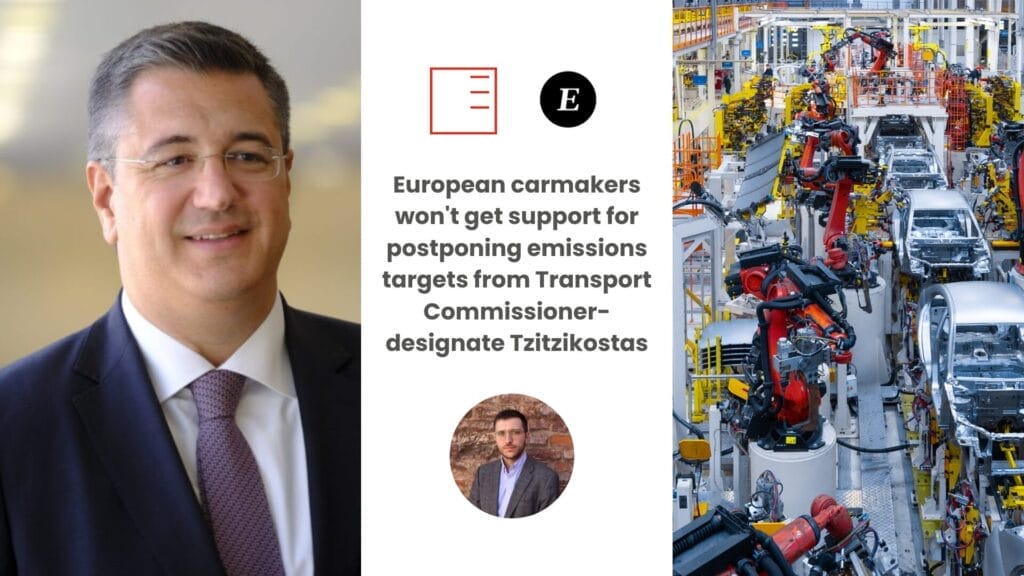
Ekonomický deník | European carmakers won't get support for postponing emissions targets from Transport Commissioner-designate Tzitzikostas
More info 6. 11. 2024
6. 11. 2024Monday's „grilling“ by MEPs of Apostolos Tzitzikostas, Greece's candidate for European Commissioner for Sustainable Transport and Tourism, showed that the European car industry will not get support from him to postpone the emission targets for next year. Tzitzikostas also wants to maintain the line of banning the sale of internal combustion engine vehicles from 2035. Filip Křenek, project coordinator and analyst at EUROPEUM Institute, commented for Ekonomický deník.
Ekonomický deník | The price of batteries for electric cars is still three times higher in Europe than in China
More info 30. 10. 2024
30. 10. 2024Electric vehicle battery prices are being dragged down by the falling value of key metals such as lithium and cobalt, but also by cheap Chinese production, which now dominates global markets. At the same time, China dominates the value chain of key materials and is interested in maintaining this dominance, says Filip Křenek, project coordinator and analyst at EUROPEUM Institute, in an interview with Ekonomický deník.
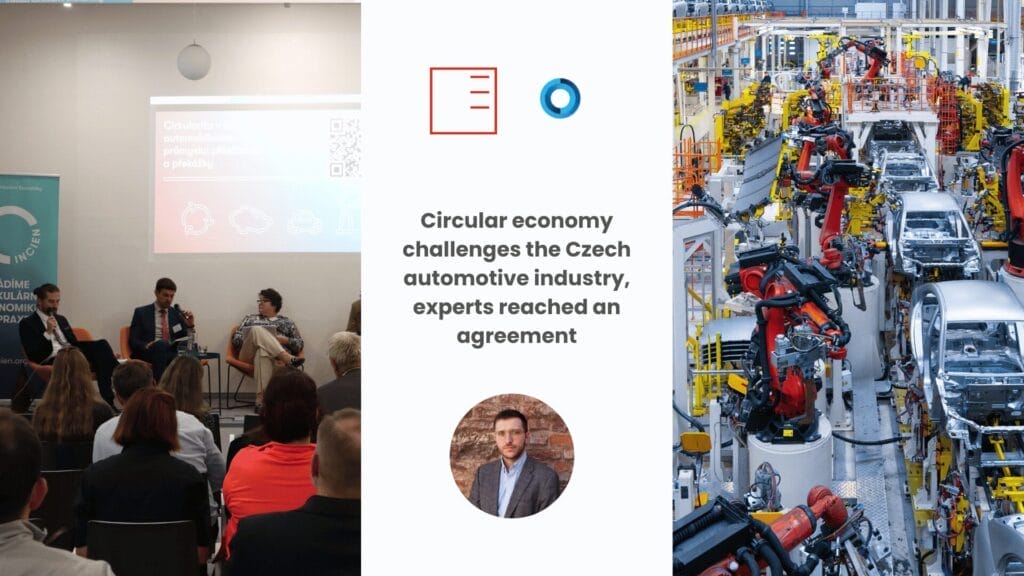
Obnovitelně.cz | Circular economy challenges the Czech automotive industry, experts reached an agreement
More info 28. 10. 2024
28. 10. 2024On Thursday 17 October 2024, a conference entitled Circularity in the Czech automotive industry: opportunities and obstacles was held by EUROPEUM Institute for European Policy in cooperation with the Institute for Circular Economy INCIEN. The event was partnered by the Czech Battery Cluster. Filip Křenek, a researcher at EUROPEUM Institute for European Policy, participated in one of the organised panel debates.

ČRo Plus | One big European stock exchange? The ultimate nonsense, like moving to Mars the day after tomorrow
More info 15. 10. 2024
15. 10. 2024The European Union is struggling with economic problems and is increasingly looking at the back of the US and in some respects China. According to a report recently commissioned by the European Commission from the former central banker and former Italian Prime Minister Mario Draghi, the solution lies, among other things, in greater European investment. And to ensure that there is enough money for this and that European investors do not go elsewhere, the European capital market should be strengthened. Filip Křenek, project coordinator and analyst at EUROPEUM Institute, commented for Český rozhlas Plus.