
 Home ›
 Institut EUROPEUM

 Filter articles:


Teraz.sk | Analyst: EU should respond with unity and reject Trump's pressure
More info 19. 1. 2026
 19. 1. 2026
Martin Vokálek, an analyst at the EUROPEUM Institute for European Policy, points out that the European Union should respond unanimously to Donald Trump's statements regarding possible pressure on Denmark in connection with Greenland. He believes that the EU should confirm its common position at the upcoming summit and send a signal that it rejects the use of economic threats as a tool of political pressure. At the same time, he emphasizes that the Union should prioritize dialogue but be prepared to use legal instruments to protect its interests if pressure is actually exerted.

What awaits us in 2026?
More info 12. 1. 2026
12. 1. 2026The year 2026 will bring new challenges for the European Union. Join us on 12 January 2026 to discuss them at a debate from the series ‘What’s New in the European Parliament?’.

Policy Paper | From REARMing to SAFEty: Defence Capability Development Trends of the V4
More info 31. 12. 2025
31. 12. 2025As the European Union has significantly stepped up its political, institutional, and financial support for strengthening defence capabilities across the Union in recent years, the paper examines how the V4 countries rely on the levers of the “Europeanisation” of defence—particularly through European funds and frameworks for defence industry development. This aspect gains particular importance in early 2025, when the European Commission will assess national programmes submitted under the Security Action for Europe (SAFE) initiative for joint loan financing and decide on the allocation of funding for joint production, research, and development projects across European and partner defence industries, writes Tamás Csiki Varga in his policy paper.
Policy Paper | "Smartphones on Wheels": Connected Cars and the EU’s Cybersecurity
More info 18. 12. 2025
18. 12. 2025The increasing presence of Chinese connected vehicles on the European market has heightened concerns about cybersecurity risks, particularly regarding their potential use for surveillance, espionage, and cyber operations. Discussions on this issue frequently draw on regulatory approaches and risk assessments developed elsewhere, most notably in the United States. Yet China itself has established one of the most comprehensive regulatory and technical standardisation frameworks for connected vehicles worldwide, writes Paulina Uznaska.
Internship opportunity at the Prague office of the EUROPEUM Institute (spring/summer 2026)
More info 16. 12. 2025
16. 12. 2025Are you a student interested in European politics? Would you like to be involved in the running of the Prague office of a leading Czech think tank or in its communication activities right in the heart of Prague? At the EUROPEUM Institute, we are looking for students for a six-month internship in our organisational and communications team!

Report | From Partner to Rival: How Should Europe Respond to China’s Growing Influence?
More info 9. 12. 2025
9. 12. 2025On December 9th, the Brussels Office of the EUROPEUM Institute, representing the Visegrad Platform, in collaboration with MEP Miriam Lexmann and her office, organised a roundtable discussion titled ‘From Partner to Rival: How Should Europe Respond to China’s Growing Influence?’. The event aimed to explore how shifts in EU–China relations, driven by deepening strategic rivalry, economic pressures, and geopolitical uncertainty, are reshaping the EU’s strategic direction.

Policy Paper | Between Control and Contradiction: The V4 in the Age of the EU Migration Pact and Labour Shortages
More info 8. 12. 2025
8. 12. 2025Since the 2015 migration crisis, the Visegrád Four (V4) countries – Poland, Hungary, Czechia, and Slovakia – have adopted strongly securitised migration narratives focused on control, sovereignty, and national identity. Although the region faces only minimal migratory pressure, migration remains a key political issue, often invoked during elections and EU-level negotiations.
Yet this narrative of exceptional threat contrasts with the V4’s growing dependence on legal labour migration from third countries, driven by shrinking working-age populations, structural labour shortages, and low wages in key sectors. This paper examines these contradictions and governance gaps, focusing on the tension between securitised political discourse and economic reality.

Report | Prospects for the EU Enlargement in the Western Balkans: A Missed Opportunity or a Strategic Turning Point?
More info 8. 12. 2025
8. 12. 2025On October 1st, the Brussels Office of the EUROPEUM Institute, representing the Visegrad Platform, opened the month with an expert roundtable discussion titled “Prospects for the EU Enlargement in the Western Balkans: A Missed Opportunity or a Strategic Turning Point?” The event explored the achievements, shortcomings, and future outlook of the EU enlargement process in the Western Balkans, while promoting an open dialogue among leading experts and policymakers in the field.

Ambition vs. Reality: What Will the EU’s 2040 Climate Targets Bring?
More info 1. 12. 2025
1. 12. 2025Join us on 1 December for a debate from the series “What’s New in the European Parliament?”, where this time we will focus on the EU’s 2040 climate targets.
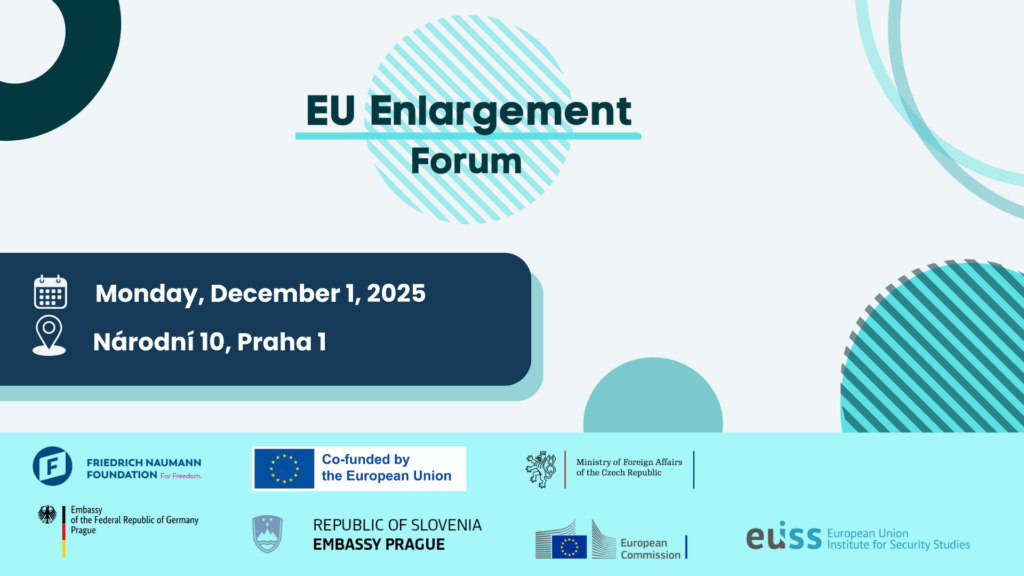
EU Enlargement Forum 2025
More info 1. 12. 2025
1. 12. 2025We warmly invite you to Monday’s programme of the Enlargement Forum conference, featuring a series of discussions on the lessons of past EU enlargements, the role of women in accession processes, and the importance of reconciliation in European integration.

Policy paper | Transatlantic reality check: embracing the new norm
More info 30. 11. 2025
30. 11. 2025The analysis assesses the evolution of transatlantic relations in 2025 in the context of Donald Trump’s return to office and changes in the U.S. approach to security guarantees. It examines the implications of these shifts for European security, collective defence, strategic autonomy, and the resilience of democratic institutions. The text also addresses issues of geopolitical stability in the Arctic and the MENA region, as well as climate and energy policy, trade relations, and technological competitiveness. Drawing on discussions from the Transatlantic Policy Forum, it formulates key recommendations for strengthening transatlantic cooperation in the areas of security, the economy, and strategic coordination.
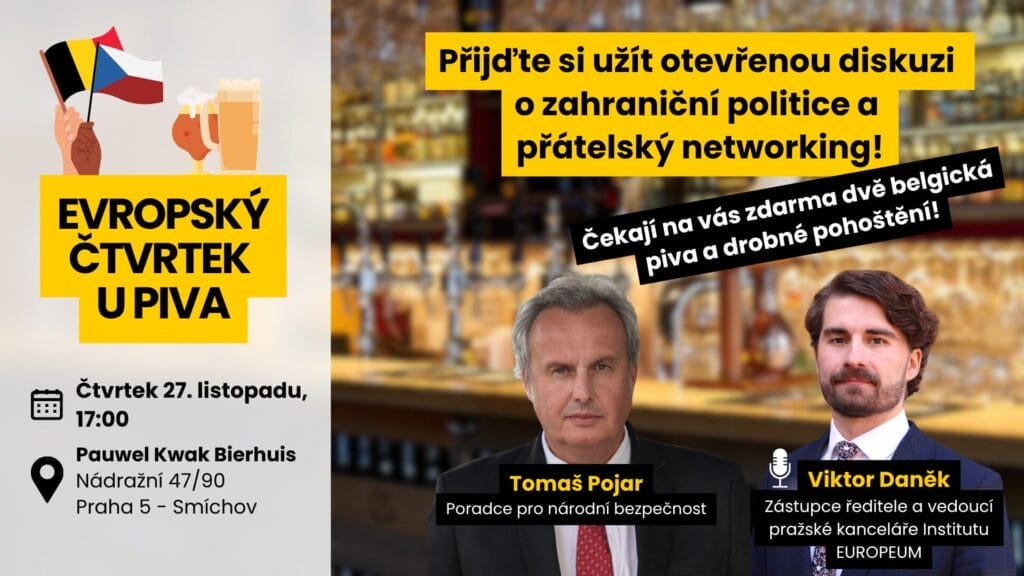
European Thursday over a Beer
More info 27. 11. 2025
27. 11. 2025Come join us on 27 November at Pauwel Kwak Bierhuis for an informal discussion on foreign policy as well as current European and security issues with Tomáš Pojar and Viktor Daněk. You can look forward to an open debate, a friendly atmosphere, and—on top of that—two Belgian beers and light refreshments on the house.