
 Home ›
 Martin Vokálek

 Filter articles:


iRozhlas | The Agricultural Fund Has Not Halted the Processing of Agrofert’s Applications or the Payment of Subsidies
More info 9. 9. 2026
 9. 9. 2026
The European Commission has suspended the payment of a portion of agricultural subsidies to companies within the Agrofert group due to a potential conflict of interest involving Prime Minister Andrej Babiš. However, the State Agricultural Intervention Fund continues to pay financial support to the holding company and has not even suspended the processing of further applications. Martin Vokálek, Executive Director and head of the Brussels branch of the EUROPEUM Institute, warned that if the fund continues to pay subsidies to companies within the Agrofert holding, it risks a major problem.

CNN Prima News | Ireland Awaits Negotiations on the European Budget
More info 1. 7. 2026
1. 7. 2026Ireland is taking over the presidency of the EU Council—one of its most difficult tasks will be negotiating the next seven-year financial framework. Martin Vokálek, executive director of EUROPEUM Institute and head of its Brussels office, commented on the matter for CNN Prima News.

Bruselské chlebíčky | Tensions with China Are Rising. And EU Leaders Are Seeking Weapons Against Beijing’s Aggressive Trade Policy
More info 15. 6. 2026
15. 6. 2026One of the key topics at the upcoming European Council summit will be the issue of the trade imbalance with China. EU leaders, however, do not want to say this out loud—the word “China” does not appear even once in the draft conclusions of the summit. According to Martin Vokálek, executive director of EUROPEUM Institute, the European Union has not yet reached the stage where it would label Beijing as an outright enemy.

Blesk | The government isn't a good steward of public funds. Are we going to pay Agrofert out of our own pockets?
More info 31. 5. 2026
31. 5. 2026The European Commission has given the Czech Republic one month to explain Prime Minister Andrej Babiš’s conflict of interest. Agriculture Minister Martin Šebestyán claims that this does not concern agricultural subsidies. Martin Vokálek, Executive Director of EUROPEUM Institute and head of Brussels office, warns: if the European Commission does not reimburse Agrofert’s subsidies, we will all pay for it out of our own taxes.

update>eu | The End of the Prague–Budapest Axis. Orbán’s Defeat Changes Babiš’s Position in Europe
More info 22. 4. 2026
22. 4. 2026Péter Magyar won the Hungarian parliamentary elections by a landslide, and Viktor Orbán is stepping down as prime minister after fifteen years. For Andrej Babiš, this means the loss of a key ally. Martin Vokálek, Executive Director of EUROPEUM Institute and Head of the Brussels Office, commented on the future of these relations for update eu.

Seznam Zprávy | Which Side Will He Take? After Orbán’s Fall, Babiš Faces a New Reality
More info 14. 4. 2026
14. 4. 2026Sunday’s parliamentary elections in Hungary marked a turning point; the end of the Orbán era is redrawing the European map. What does the loss of an ally mean for Andrej Babiš, and what are the implications of Péter Magyar’s victory for the European Union? Martin Vokálek, Executive Director and Head of the Brussels Office of EUROPEUM Institute, commented for Seznam Zprávy.

Voxpot | A Traitor Speaks. Hungary’s “Snitching” to Lavrov Will Transform the EU
More info 31. 3. 2026
31. 3. 2026The revelation that Hungarian Foreign Minister Péter Szijjártó shared confidential information from EU negotiations with Russian Foreign Minister Sergey Lavrov confirmed what many had suspected: Hungary is an unreliable partner that other EU member states do not trust. How will this scandal affect the future functioning of the European community? Martin Vokálek, Executive Director and Head of the Brussels Office of EUROPEUM Institute, commented for Voxpot.

Teraz.sk | The EU Is Reaching the Limits of Its Decision-Making Capacity in Times of Crisis and War
More info 20. 3. 2026
20. 3. 2026The summit of European Union member state leaders in Brussels has cast the bloc in a realistic light—it knows what steps it wants to take, but at the same time is reaching the limits of its decision-making capacity amid several parallel crises and two wars with a direct impact on Europe. Martin Vokálek, Executive Director and Head of the Brussels Office of EUROPEUM Institute, commented on the summit’s topics for TASR. According to him, the key point is that the EU is no longer trying to maintain unity at any cost.
ČT24 | European Union finance ministers discussed how to address rising oil prices
More info 10. 3. 2026
10. 3. 2026Eurozone finance ministers met in Brussels to discuss the impact of oil prices and the uncertainty surrounding the situation in the Middle East. Martin Vokálek, Executive Director of EUROPEUM Institute and head of its Brussels office, commented on ČT24 on the subsequent meeting of finance ministers from all European Union member states, where, in addition to energy, the financing of Ukraine and efforts to further integrate European financial markets were also discussed.

ČRo Plus | European leaders' response to US-Israeli attack on Iran is cautious but unified, expert sums up
More info 2. 3. 2026
2. 3. 2026Martin Vokálek, Executive Director and Head of the Brussels Office of EUROPEUM Institute for European Policy, summarized European leaders' responses to events in Iran for ČRo Plus.

voxpot | Diplomacy or bazooka? How will Europe respond to Trump’s threats?
More info 21. 1. 2026
21. 1. 2026U.S. President Donald Trump has escalated pressure on Europe through tariff threats and explicit challenges to Greenland’s sovereignty. The European Union is now weighing a response that balances diplomacy with tougher countermeasures, including the potential use of its so-called economic “bazooka.” Experts warn that without a confident and united stance, Europe risks further weakening transatlantic relations and its own global standing. Commented on by Martin Vokálek, Executive Director and Head of the Brussels Office of the EUROPEUM Institute.
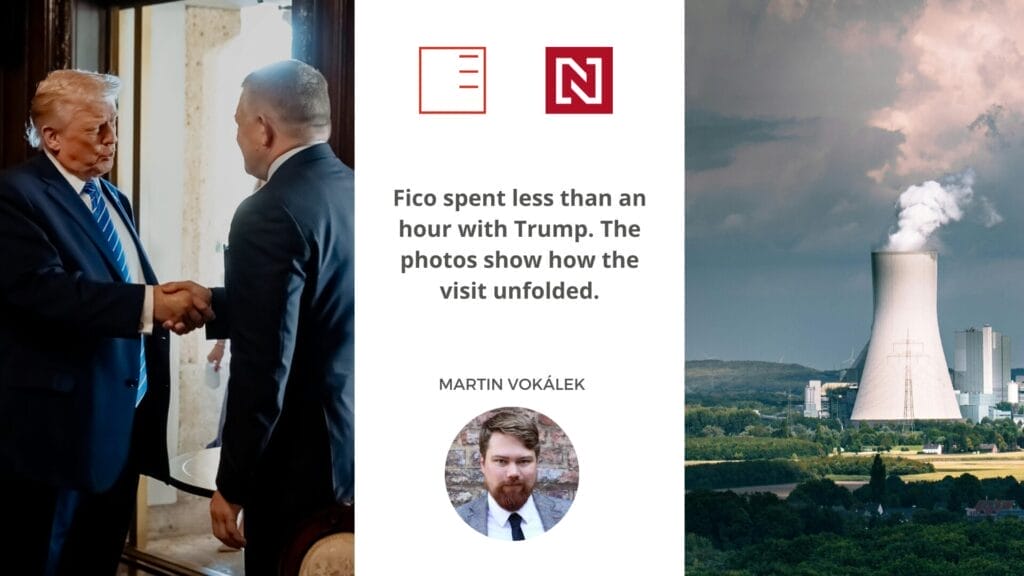
Deník N | Fico spent less than an hour with Trump. The photos show how the visit unfolded.
More info 19. 1. 2026
19. 1. 2026Prime Minister Robert Fico's visit to Donald Trump at Mar-a-Lago did not yield any official results, yet Fico presented it at home as a significant diplomatic success. Analyst Martin Vokálek comments on the meeting, considering Fico's foreign policy unreasonable and claiming that "Slovakia risks being torn apart in all four directions."