Menu
Upcoming events
Past events
1. December 2025

Ambition vs. Reality: What Will the EU’s 2040 Climate Targets Bring?

Join us on 1 December for a debate from the series “What’s New in the European Parliament?”, where this time we will focus on the EU’s 2040 climate targets.
1. December 2025

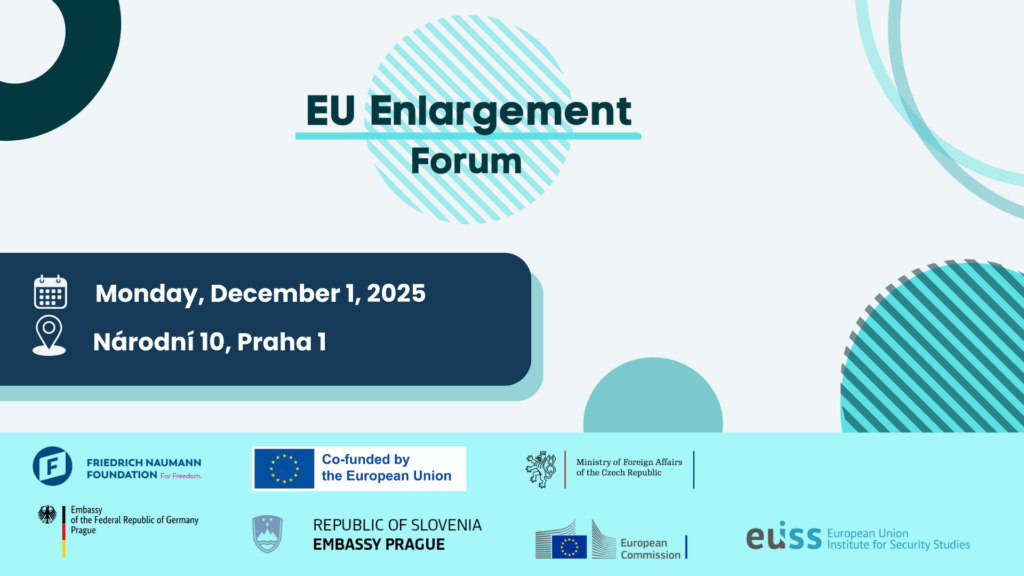
EU Enlargement Forum 2025

We warmly invite you to Monday’s programme of the Enlargement Forum conference, featuring a series of discussions on the lessons of past EU enlargements, the role of women in accession processes, and the importance of reconciliation in European integration.
27. November 2025

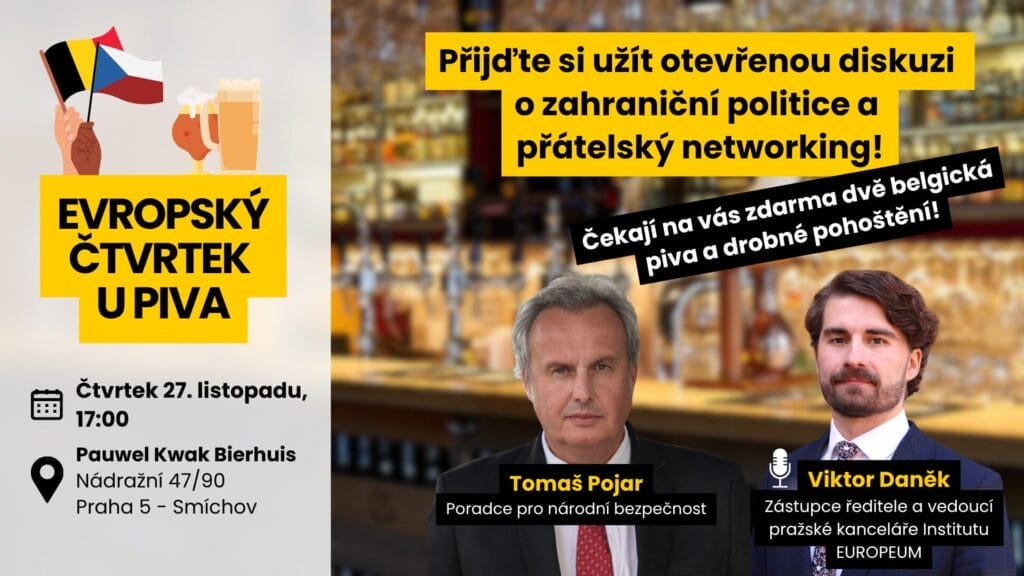
European Thursday over a Beer

Come join us on 27 November at Pauwel Kwak Bierhuis for an informal discussion on foreign policy as well as current European and security issues with Tomáš Pojar and Viktor Daněk. You can look forward to an open debate, a friendly atmosphere, and—on top of that—two Belgian beers and light refreshments on the house.
25. November 2025

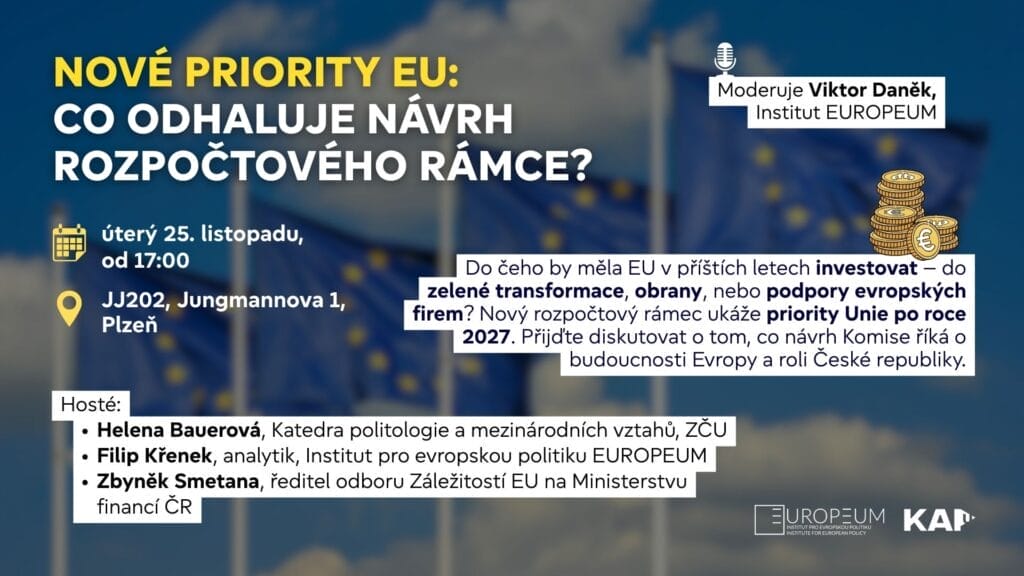
New EU Priorities: What Does the Proposed Budgetary Framework Reveal?

We invite you to a debate in Plzeň on what the EU’s new budget proposal reveals about the Union’s future priorities and the role the Czech Republic may play in them.
25. November 2025

Cinema Europa: Drenched in Oil | Screening with Discussion

We cordially invite you to the screening of the film Drenched in Oil (2022), which will be followed by a discussion with our guests.
18. November 2025

Europa Cinema: Generation Euromajdan | Screening and Debate

A film crew has been following Mustafa Nayyem, Svitlana Zalishchuk, and Serhiy Leshchenko since 2013, documenting their fight for democracy in Ukraine. Over the years captured on film, they underwent a major shift in their roles, moving from activism into high-level politics.
In the Media
Projects
Publications
19. January 2026

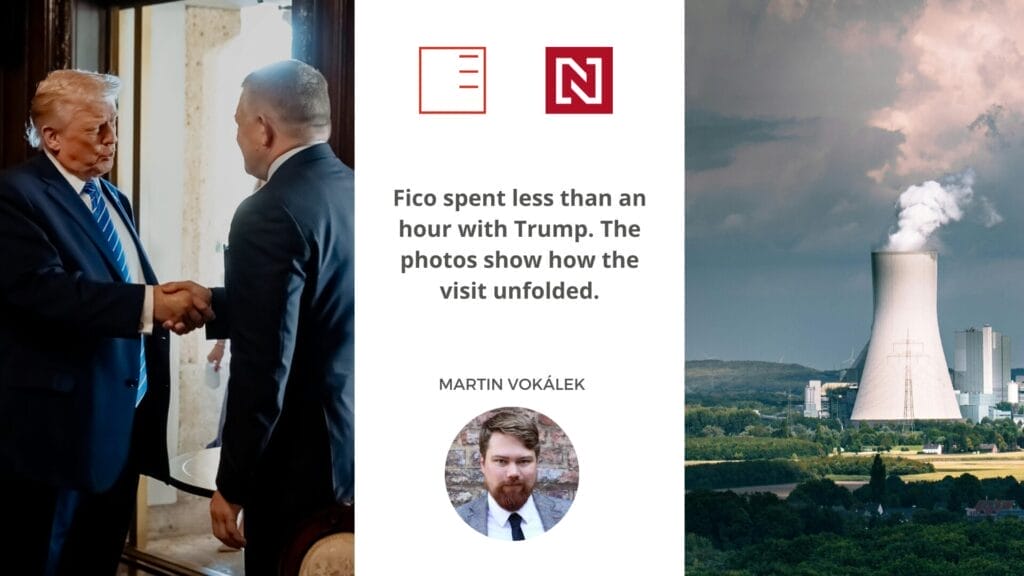
Deník N | Fico spent less than an hour with Trump. The photos show how the visit unfolded.

Prime Minister Robert Fico's visit to Donald Trump at Mar-a-Lago did not yield any official results, yet Fico presented it at home as a significant diplomatic success. Analyst Martin Vokálek comments on the meeting, considering Fico's foreign policy unreasonable and claiming that "Slovakia risks being torn apart in all four directions."
19. January 2026

Teraz.sk | Analyst: EU should respond with unity and reject Trump's pressure

Martin Vokálek, an analyst at the EUROPEUM Institute for European Policy, points out that the European Union should respond unanimously to Donald Trump's statements regarding possible pressure on Denmark in connection with Greenland. He believes that the EU should confirm its common position at the upcoming summit and send a signal that it rejects the use of economic threats as a tool of political pressure. At the same time, he emphasizes that the Union should prioritize dialogue but be prepared to use legal instruments to protect its interests if pressure is actually exerted.
12. January 2026

The Chinese electric vehicle bubble is bursting. Will fake used cars flood the European market?

The Chinese electric vehicle market is slowing down as government support is gradually being reduced and domestic demand weakens. Chinese manufacturers are increasingly seeking to export their vehicles abroad, including to Europe, which may influence future EV prices and intensify competition for European carmakers. However, analysts stress that this does not indicate a collapse of the Chinese market, but rather a consolidation in which only the strongest players will survive, giving Europe time to adapt its electric mobility strategy. The article was commented on by Filip Křenek, analyst at the EUROPEUM Institute.
2. January 2026

“The situation is not catastrophic.” The top ten geopolitical risks and opportunities for Ukraine in 2026. Spoiler: Ukraine itself generates some of the risks.

The prospects for ending the war in Ukraine in 2026 remain uncertain, shaped by global geopolitical dynamics from Washington to Beijing. While risks include wavering U.S. commitment, European political fragmentation, and growing Russia–China cooperation, Ukraine also faces important opportunities, particularly through deeper integration with the European Union and a stronger role in Europe’s security architecture. Commented by Martin Vokálek, Executive Director and Head of the Brussels Office of the EUROPEUM Institute.
29. December 2025

Despite the challenges, the Czech automotive industry is doing well. What awaits it next year?

Despite high energy prices, geopolitical uncertainty, and growing international competition, the Czech automotive industry remains in relatively strong shape. Production levels in 2025 remain high, with Czechia recording one of the strongest year-on-year growth rates in Europe. The sector’s resilience is driven by its flexibility, high factory utilization, and growing success on European markets, particularly in electric vehicles. The article was commented on by Filip Křenek, analyst at the EUROPEUM Institute.
18. December 2025

“Wary Brussels: Babiš’s solution to the conflict of interest may not be enough.”

Although Andrej Babiš claims to have resolved his conflict of interest by transferring Agrofert into a trust structure, Brussels remains cautious. The European Commission has so far refrained from issuing a clear position, waiting to see whether the proposed solution genuinely addresses the legal and political risks related to the use of EU funds. Commented by Martin Vokálek, Executive Director and Head of the Brussels Office of the EUROPEUM Institute.
30. November 2024

Circularity and lifecycle management of batteries and structural materials in the automotive industry as an opportunity for Czechia*

After three successful projects focusing on the decarbonization of the Czech automotive industry, the Green Europe team of EUROPEUM in collaboration with the Institute of Circular Economy (INCIEN) is broadening its focus and taking a more circular approach. This project will focus on better lifecycle and end-of-life management of materials used in vehicles and batteries. The collaboration will be split into two research areas.
11. November 2024

TAPF | Transatlantic Evening Talks

Don’t miss this unique opportunity to expand your understanding of transatlantic relations with a one-week program in November! Over the course of this week, you’ll engage with experts, participate in discussions, and gain invaluable insights into the complex dynamics shaping the relationship between Europe and North America.
31. July 2024

RevivEU

RevivEU project, carried out by four leading institutions in the V4 countries, looks at the needs, concerns and fears of the V4 citizens in four various EU-related topics. It does so through both quantitative and qualitative research of citizens´ attitudes towards climate change, migration, covid-19 and the rule of law. It also analyses the governmental policies in these four main areas and how the communication of these policies is framed in the public discourse.
9. April 2024

Think Visegrad conference - EU Enlargement Forum

On 10 and 11 April 2024, Prague will host a two-day conference entitled "20 Years of Reuniting Europe's East and West", organised by EUROPEUM Institute for European Policy in cooperation with the Ministry of Foreign Affairs as part of the Think Visegrad platform and the project (Re)uniting the East and West: Reflections on the 2004 EU enlargement (REWEU) supported by the International Visegrad Fund and the European Commission. The programme will also include the second edition of the EU Enlargement Forum.
14. March 2024

Preparing news media in Bosnia and Herzegovina and Serbia for the digital age

The project aims to equip civil society organisations in Bosnia and Herzegovina and Serbia with comprehensive knowledge of media pluralism, media freedoms, and access to information necessary in the digital transition of the news media sector.
4. December 2025

Blog | Israel on Center Stage: Eurovision, Politics, and the Fight for Neutrality

Even though the vote on Israel’s participation in Eurovision 2026 has already taken place — and some countries are now stepping back from the contest — the core dilemma remains unchanged. This piece breaks down how Eurovision found itself at the center of global politics — and why the debate over Israel is only one chapter in a longer struggle over neutrality, reputation, and the future of the contest. Perfect for anyone trying to make sense of what’s unfolding now.
4. December 2025

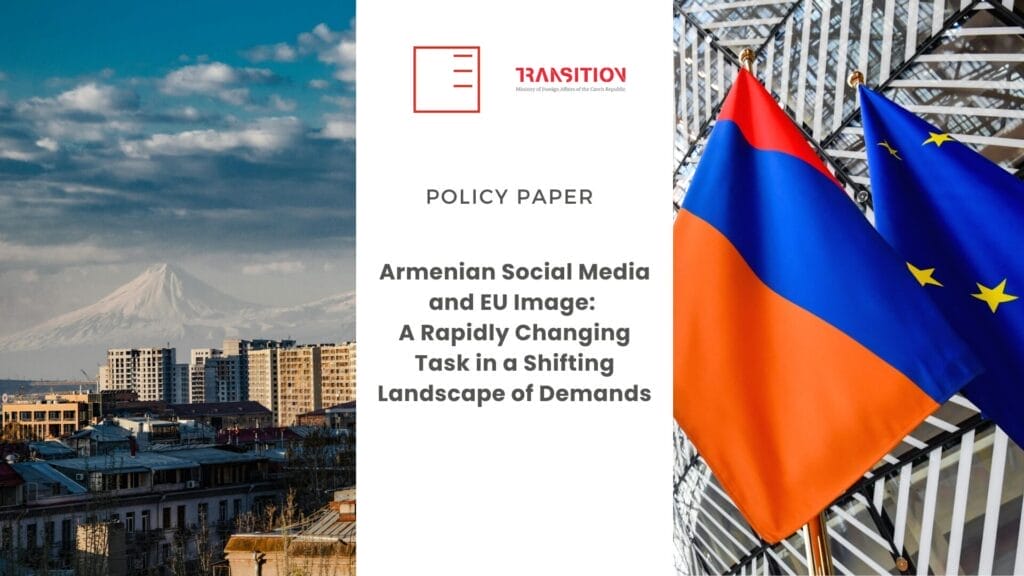
Policy Paper | Armenian Social Media and EU Image: A Rapidly Changing Task in a Shifting Landscape of Demands

This policy paper explores how the image of the European Union is shaped on Armenian social media amid growing political uncertainty and shifting expectations. It analyses key online narratives and actors, as well as the tension between hopes invested in the EU and frustration over limited outcomes in a rapidly changing geopolitical environment.
1. December 2025

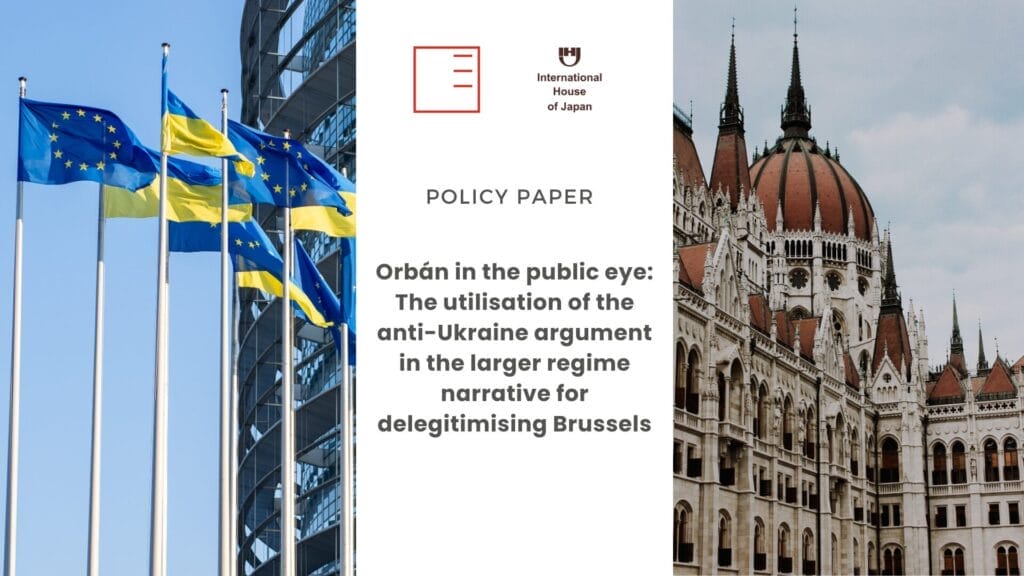
Policy Paper | Orbán in the public eye: The utilisation of the anti-Ukraine argument in the larger regime narrative for delegitimising Brussels

This policy paper examines how Ukraine’s prospective EU accession has been turned into a tool of domestic political mobilisation in Hungary. It traces how Viktor Orbán and government communication frame Ukraine as a threat and embed the issue into a broader anti-Brussels narrative built on fears of war, loss of sovereignty, and “foreign values” in the run-up to the 2026 elections.
1. December 2025

Final report | The platform Revolution : Shaping the Fair Future of Platform Work in the EU and Western Balkans

Platform work in the V4 and Western Balkans is rapidly expanding but remains weakly regulated, creating risks for workers and social systems. Authored by Silke Maes, a research fellow at the EUROPEUM Institute for European Policy, and financed by Stiftung Mercator, this final report calls for region-specific reforms to strengthen legal frameworks, enforcement, worker protection, and data collection, supported by broader cooperation at national and EU levels.
30. November 2025

Policy paper | Transatlantic reality check: embracing the new norm

The analysis assesses the evolution of transatlantic relations in 2025 in the context of Donald Trump’s return to office and changes in the U.S. approach to security guarantees. It examines the implications of these shifts for European security, collective defence, strategic autonomy, and the resilience of democratic institutions. The text also addresses issues of geopolitical stability in the Arctic and the MENA region, as well as climate and energy policy, trade relations, and technological competitiveness. Drawing on discussions from the Transatlantic Policy Forum, it formulates key recommendations for strengthening transatlantic cooperation in the areas of security, the economy, and strategic coordination.
21. November 2025

Policy Paper | Enforcement of the EU Regulation on Forced Labour and Systemic Risks of Forced Labour in Xinjiang

Na konci listopadu 2024 učinil Evropský parlament významný krok, když přijal nařízení 2024/3015, které zakazuje uvádění výrobků vyrobených za použití nucené práce na trh EU. Tento zákaz, jenž vstoupí v platnost v prosinci 2027, se vztahuje na celý dodavatelský řetězec. Vymáhání nařízení bude probíhat prostřednictvím vnitrostátních orgánů členských států a Evropské komise v případech mimo území EU. Ačkoli má opatření globální rozsah, čelí celé řadě výzev – zejména v souvislosti se Sin-ťiangem. Praktiky nucené práce v tomto regionu byly opakovaně zdokumentovány a potvrzeny jak Mezinárodní organizací práce (ILO), tak Organizací spojených národů (OSN). Zároveň je Sin-ťiang klíčovým dodavatelem solárních panelů, kritických surovin, hliníku, PVC a bavlny, přičemž nucená práce zde často probíhá formou státem organizované mobilizace mimo detenční zařízení, což její odhalení výrazně ztěžuje. Jak upozorňuje Jan Švec, výzkumný pracovník Ústavu mezinárodních vztahů v Praze, prosazování tohoto nařízení bude představovat jeden z nejsložitějších úkolů obchodní politiky EU.

Follow us on X

Maďarsko čekají letos v dubnu parlamentní volby. Již třetím rokem po sobě se očekává, že růst HDP zůstane pod hranicí 0,5 %. V situaci přetrvávající ekonomické stagnace se nabízí zásadní otázka: může to znamenat začátek konce éry Viktora Orbána?

V nejnovější epizodě Voices of

Duševní nepohoda už dávno není okrajové téma. Rok co rok průzkumy potvrzují, že se s ní potýká značná část evropské populace. Stres, úzkosti, vyhoření nebo pocit vnitřního tlaku se stávají běžnou součástí života. Co s tím ale můžeme dělat?
V této epizodě podcastu Café Evropa

Načíst více

Listen to our Podcast

Partners

Contact Us

You can contact us by filling out the form below, by email, by phone or via social media.

Contact EN
chevron-down
linkedin facebook pinterest youtube rss twitter instagram facebook-blank rss-blank linkedin-blank pinterest youtube twitter instagram