
 Home ›
 Institut EUROPEUM

 Filter articles:


Discussion | Armenia at the Crossroads Between East and West
More info 26. 5. 2026
 26. 5. 2026
Shortly after Moldova’s elections, Armenia, another EU Eastern Partnership country, will also face key parliamentary elections at the beginning of June. These elections will effectively serve as a referendum on the country’s geopolitical trajectory, the democratic reforms initiated after its Velvet Revolution, and the continuation of the peace process following the war in Nagorno-Karabakh. Join our discussion.

Report from the Discussion | Women, Motherhood and the Labour Market in the Czech Republic and Europe
More info 18. 5. 2026
18. 5. 2026How can European countries better reconcile parenthood, career development, and gender equality? An expert discussion organised and moderated by Aneta Martinek and Linda Tejchman, under the auspices of Institut pro evropskou politiku EUROPEUM in cooperation with the Permanent Representation of the Czech Republic to the European Union, opened a broader debate on the position of women in the labour market, systemic barriers, and the future of social policies in both the Czech Republic and Europe.

Café Evropa Podcast | Invitation to Europe Day Recording
More info 9. 5. 2026
9. 5. 2026Come celebrate Europe Day with the Café Evropa podcast! We invite you to a public recording, this time on the topic “The EU in the Hands of Young People: What Opportunities Do They Have?”

Report | After the Draghi Report: The Role of Central Europe in Strengthening EU Competitiveness
More info 7. 5. 2026
7. 5. 2026On 23 March 2026, EUROPEUM Institute for European Policy, in cooperation with the Think Visegrad Platform, organised a roundtable discussion focused on the future of EU competitiveness in an increasingly challenging geopolitical and economic environment.
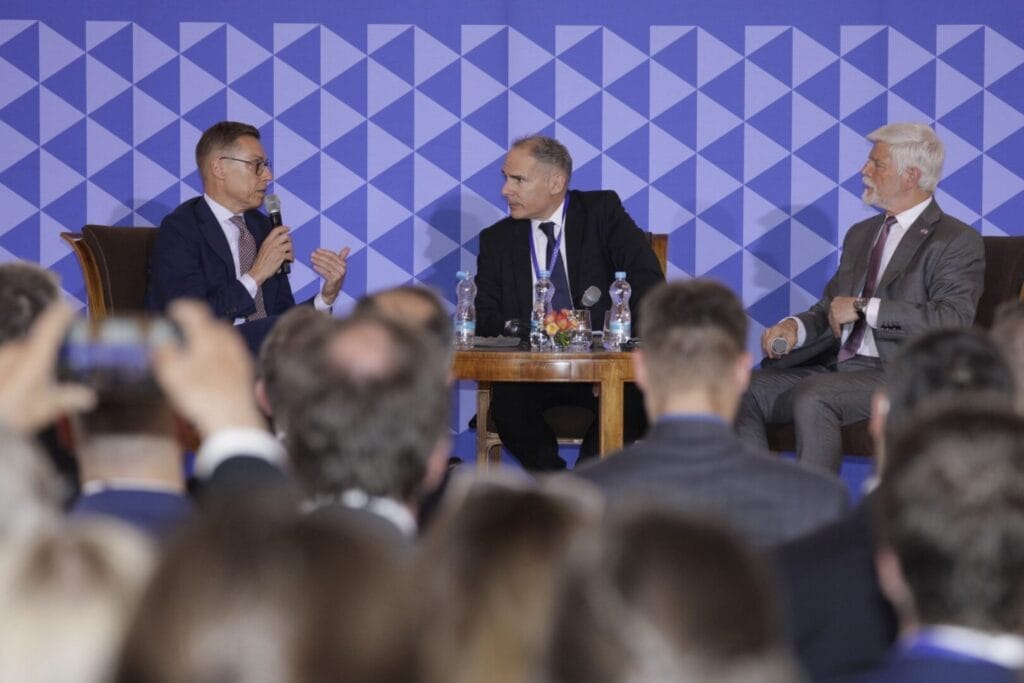
Europe as a Task 2026: A Stronger Europe as a Shared Responsibility
More info 7. 5. 2026
7. 5. 2026The second edition of the conference Europe as a Task 2026 opened on 5 May at Prague Castle with Presidents Petr Pavel and Alexander Stubb. The two-day event focused on security, competitiveness and Europe’s future role in an increasingly unstable world.

#TaskEurope 2026 | Finnish President Alexander Stubb to Speak at the Conference
More info 5. 5. 2026
5. 5. 2026The Europe as a Task 2026 conference at Prague Castle will welcome one of today’s most prominent European leaders—Finnish President Alexander Stubb will participate as the keynote speaker on the first day of the event.

Debate: Will the "28th regime" give European startups a boost?
More info 4. 5. 2026
4. 5. 2026Join us for the next installment in our series of open debates, “What’s New in the European Parliament?” This time, we’ll discuss whether the 28th regime will give European startups the boost they’re expecting.

Report | EU Enlargement in Times of Geopolitical Change
More info 23. 4. 2026
23. 4. 2026How are current geopolitical developments shaping the future of EU enlargement? The expert discussion “Western Balkans First? Enlargement with Ukraine and Moldova in Focus”, organised by EUROPEUM Institute for European Policy in cooperation with the Think Visegrad Platform, focused on the future of EU enlargement in the context of Russia’s war against Ukraine and the changing security environment in Europe.

Save the date: Join us for another beer on Thursday, April 23rd!
More info 23. 4. 2026
23. 4. 2026European Thursdays over a Beer continue! We’ll meet again on April 23 for an informal discussion focused on foreign policy and current European issues, as always in Smíchov.
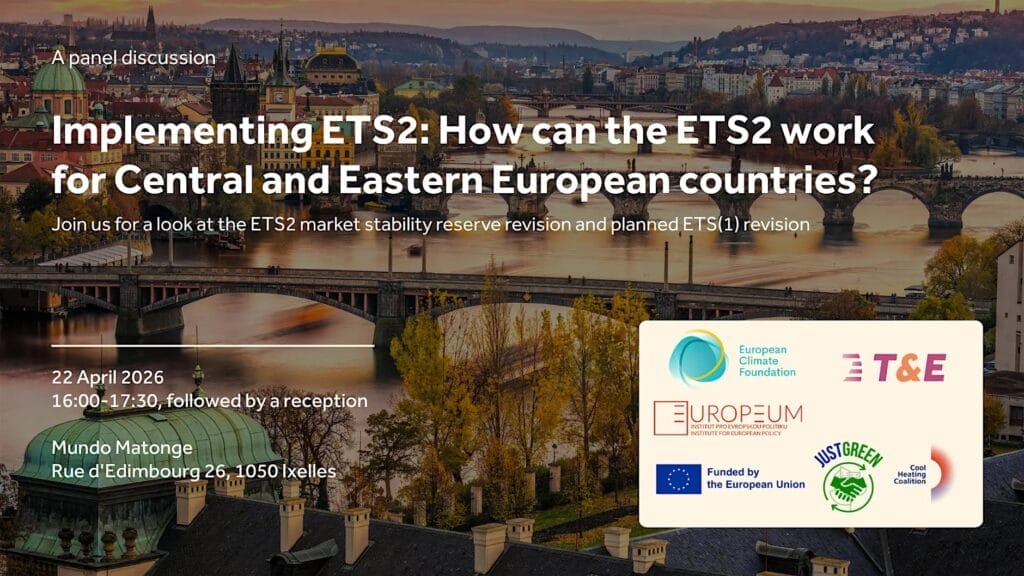
Discussion | How can the ETS2 work for Central and Eastern European countries?
More info 22. 4. 2026
22. 4. 2026How ETS2 can be effectively implemented in Central and Eastern European countries? Come listen and discuss as the EU advances its climate policies, these countries face specific challenges and opportunities related to affordability, energy systems, and public acceptance.

Café Collaborations | Cities for Cars or for People?
More info 14. 4. 2026
14. 4. 2026Come to our next Café Collaborations: Cities for Cars or for People? How to Modernize Transport Systems – and How to Pay for Them? Join us for an engaging discussion on how we can rethink and modernise mobility.

Webinar | New Green Savings: New Challenges and Only Loans?
More info 9. 4. 2026
9. 4. 2026Over the past 15 years, the New Green Savings program has played a significant role in financing energy-efficient renovations. The program is now undergoing changes. What do these new changes mean for applicants, and how do they differ from the past? Join us to discuss this timely topic with experts and the general public.