
 Home ›
 Institut EUROPEUM

 Filter articles:


25 and Counting – The Voices of Visegrad
More info 31. 3. 2026
 31. 3. 2026
The Visegrád Group represents a unique crossroads of history and values, where the experience of democratic transformation meets the ambition to co-shape the future of Europe as a whole. This shared past and geopolitical position provide the V4 countries with a strong, authentic voice that is indispensable in today’s international dialogue on security and integration. […]
Policy Brief | ETS2 and Czechia’s Energy Self-Sufficiency: Can Carbon Pricing Support the Phase-Out of Imported Gas and Oil?
More info 30. 3. 2026
30. 3. 2026In an era of escalating climate change, geopolitical tensions and deepening dependence on imported fossil fuels, the Czech Republic stands at a turning point in its energy transition. Therefore, the implementation of ETS2 offers a dual-faced opportunity: on one hand, it can serve as another impulse for reducing reliance on foreign oil and gas, enhancing national resilience and autonomy; on the other, it risks becoming a flashpoint of political division and social backlash, especially among households and small enterprises in rural areas sensitive to rising costs.

Launch Workshop: Build Fair project
More info 27. 3. 2026
27. 3. 2026The kick-off workshop for the EU-funded Build Fair project will bring together partners from the Czech Republic, Estonia, Ireland, Spain, and Romania and launch an important discussion on how citizens perceive fairness in the EU’s migration and digital policies.

Save the date: See you again for beer on Thursday, March 26!
More info 26. 3. 2026
26. 3. 2026European Thursdays over beer continue! Once again, we can meet for an informal debate focused on foreign policy and current European issues on March 26, traditionally in Smíchov.

New Green Savings: Newly in limbo and only with a loan?
More info 20. 3. 2026
20. 3. 2026Over the past 15 years, the New Green Savings program has significantly helped Czech households finance energy-efficient renovations. But what is the future of the program once the funds have been exhausted?

JustGreen Project at the Climate Action Conference 2026
More info 18. 3. 2026
18. 3. 2026On March 18, at the “Science for Climate Action 2026” conference in Brussels, we presented our JustGreen project as part of a session focused on the experiences of citizens in the V4 countries with the green transition and its impact on their daily lives. Rebeka Hengalová, Research Fellow at EUROPEUM Institute, outlined the project’s main objectives and findings.

Café Collaborations: Housing Accessible to All–Old and Young? Reality or Utopia?
More info 12. 3. 2026
12. 3. 2026This Thursday, March 12, Prague will host an English-language debate entitled Café Collaborations: Housing Accessible to All – Old and Young? Reality or Utopia? Together with experts from Austria, Spain, and the Czech Republic, we will explore why affordable housing in Czechia continues to be such a challenge and what we can learn from the experiences of other European countries.

European Thursday over a Beer
More info 26. 2. 2026
26. 2. 2026Come by on February 26th at 5:00 PM to Pauwel Kwak Bierhuis for an informal debate on what EU membership really means for Central Europe. This session's Hot Take: > "Central Europe has adopted the Western standard of living but rejects Western standards of behavior—essentially: 'Gimme the money and keep your values.'" This time, we’ll […]
Associate Research Fellow on Digitalisation
More info 26. 2. 2026
26. 2. 2026EUROPEUM Institute for European Policy is a non-profit, non-partisan, and independent think-tank focusing on European integration and cohesion. EUROPEUM contributes to democracy, security, stability, freedom, and solidarity across Europe as well as to active engagement of the Czech Republic in the European Union. EUROPEUM undertakes original research, organizes public events and educational activities, and formulates new ideas and recommendations to improve European and Czech policy making.
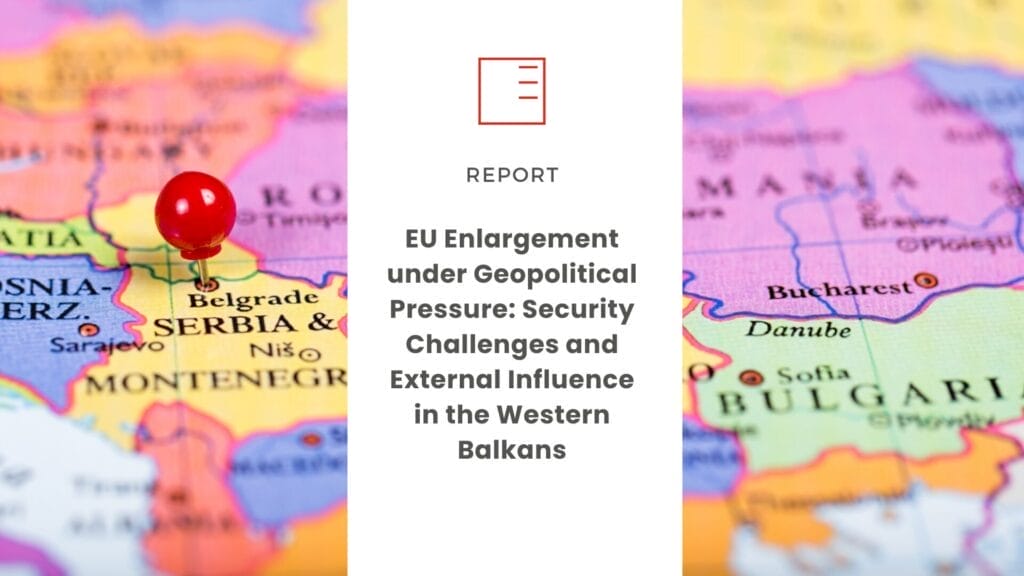
Report | EU Enlargement under Geopolitical Pressure: Security Challenges and External Influence in the Western Balkans
More info 17. 2. 2026
17. 2. 2026How are geopolitical shifts reshaping the prospects for European Union enlargement in the Western Balkans? This report summarizes an expert discussion on the evolution of EU enlargement policy in the Western Balkans in the context of a changing security environment and the growing influence of external actors. The discussion highlights that, following Russia’s invasion of Ukraine, enlargement has become not only a technical, conditionality-based process but also a strategic instrument of European security. Participants pointed to uneven progress among Western Balkan countries, persistent challenges related to the rule of law and democratic reforms, and the increasing influence of external actors, particularly Russia and China. The publication also emphasises the need to preserve the principle of merit-based conditionality, strengthen gradual integration through tangible benefits for citizens, and improve the EU’s strategic communication towards local societies. A key conclusion is that the credibility and success of enlargement will depend on the EU’s ability to balance geopolitical urgency with sustained support for the region’s democratic transformation.

Seznam Zprávy | Another plan to boost the EU: Digital identity for all citizens and businesses
More info 13. 2. 2026
13. 2. 2026By the end of 2026, the European Union will introduce a unified digital identity for citizens and businesses. The EU Digital Identity Wallet will allow users to store official documents, sign contracts, and verify their identity across member states with just a few clicks. The initiative aims to reduce bureaucracy, cut costs, and remove barriers within the single market, while also raising concerns about data protection and the potential pressure to make the system widely mandatory. The article was commented on by Filip Křenek, analyst at the EUROPEUM Institute.

Report | Revision of Price Safeguards in the ETS2 System
More info 5. 2. 2026
5. 2. 2026This briefing document maps the current state of negotiations regarding changes to the ETS2 emission allowance system proposed by the European Commission. The text is based on an expert roundtable discussion held on January 16, 2026. The discussion was attended by representatives of the European Parliament and the Commission, experts from Czech ministries, employer associations, companies, and regional organizations, as well as specialists from the non-profit sector, research institutes, and academia. The primary objective of this material is to bring necessary expert depth to the debate on the future form of ETS2 and to help the public and key stakeholders better navigate this complex topic, which will fundamentally affect not only household budgets but also key economic sectors. The authors of the text are our research fellow Rebeka Hengalová, analyst Kateřina Kolouch Grabovská (Fakta o klimatu), and researcher Tomáš Protivínský (IDEA at CERGE-EI).