

In the Media
Our researchers and collaborators regularly comment to the media, here you will find all their comments. If you are interested in a media comment from one of our experts, please do not hesitate to contact our communication team! Filter the articles:

Euractiv | Proposed new EU budget is promising but raises uncertainity, experts warn

 23. 10. 2025
Negotiations on the EU's multiannual budget for 2028-2034 are in full swing. How are Czechia and Poland responding to the proposal? Experts say that both countries appreciate the simplified structure and greater flexibility of the budget, but at the same time express concerns about the system of national plans.
Euractiv | Europe up close | Czech preparations for the new EU budget
12. 10. 2025The European Commission has presented its proposal for the EU's multiannual budget for 2028–2034, which it describes as ambitious. However, a closer look reveals that its actual form is more modest than grandiose. The new budget brings changes in structure and priorities that may have a significant impact on Czechia, as explained by EUROPEUM Institute analyst Filip Křenek in the Europe Up Close podcast.
EUROACTIV | Křenek: EU budget reform is necessary. It’s time to acknowledge that the world is changing — otherwise, we’ll miss the train.
10. 10. 2025Negotiations on the new multiannual EU budget for 2028–2034 are beginning. However, the European Commission’s summer proposal has faced criticism from various sides. What major changes might the new budget bring? Will it be good or bad news for the Czech Republic? And what should the country prepare for as the new budget comes into effect? Analyst Filip Křenek from the EUROPEUM think tank discusses these questions in the podcast Europe Up Close.
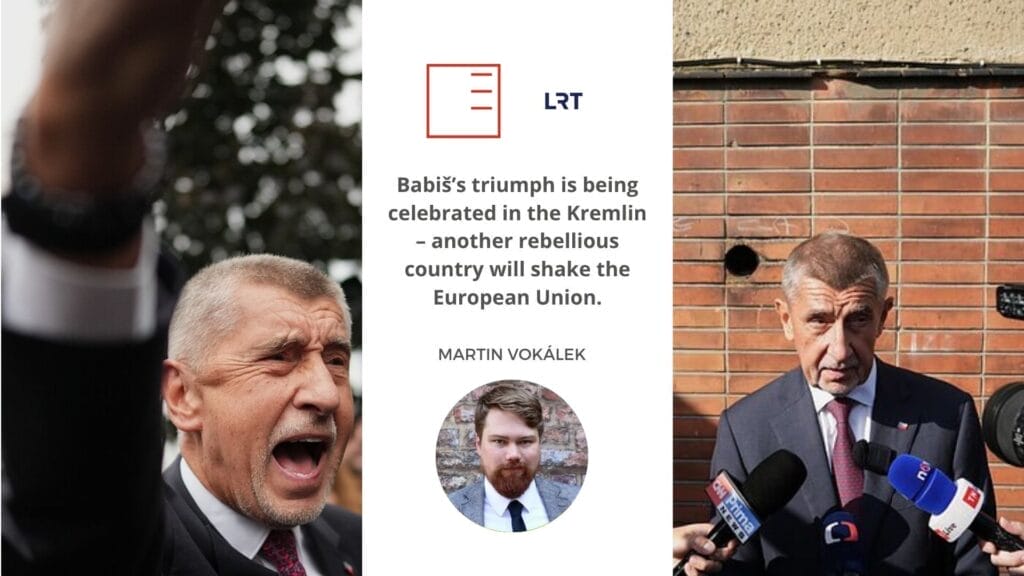
LRT | Babiš's triumph is being celebrated in the Kremlin – another rebellious country will shake the European Union
10. 10. 2025The election victory of Andrej Babiš's movement in the Czech Republic sparked a wave of congratulations from Budapest, Bratislava, Italy, and the French far right. Hungarian Prime Minister Viktor Orbán called it "a big step for the Czech Republic and good news for Europe." But what does this "good news" really mean for the European Union? Martin Vokálek, executive director and head of the Brussels office of the EUROPEUM Institute, commented for LRT.
Svet :24 | Ursula von der Leyen remains at the head of the European Commission
9. 10. 2025The European Commission, led by Ursula von der Leyen, survived a motion of censure in the European Parliament. The initiatives of the Patriots for Europe and Left groups ultimately failed to secure the necessary number of votes. To dismiss the Commission, two-thirds of those present and a majority of all MEPs would have had to support the motion. Martin Vokálek, Executive Director and Head of the Brussels Office of the EUROPEUM Institute, commented for Svet :24.
Radio Prostor | Most households are against emission allowances, lacking information about the benefits
9. 10. 2025More than half of Czech households reject the introduction of emission allowances for transport and heating. This is likely due primarily to negative public debate, which lacks information about the potential benefits of the system, such as revenues for the state budget or protection for the most vulnerable households. Rebeka Hengalová, an analyst at the EUROPEUM Institute, commented on the situation for Radio Prostor.
Televizní Noviny | Are combustion engines making a comeback?
7. 10. 2025Chancellor Friedrich Merz has rejected the EU's plan to ban combustion engines from 2035. Czech politicians and representatives of the automotive industry welcome the change in the German government's position. Filip Křenek, an analyst at the EUROPEUM Institute, commented on the matter for Televizní Noviny.
Seznam Zprávy | The money that flowed into the Czech Republic will no longer come. Experts advise on how to replace it
6. 10. 2025Czechia is looking for a way to remain competitive in Europe while also accessing billions in EU funds. It is not just about the state budget, but also about its future position among European players. Filip Křenek, an analyst at the EUROPEUM Institute, commented for Seznam Zprávy.
European Newsroom | Analysts: ANO’s victory is not good news for Brussels, however Babiš is not Orbán
5. 10. 2025Andrej Babiš’s victory could raise concerns in Brussels, but analysts believe the outcome will depend on his future cabinet. Despite his alliance with Hungary’s Viktor Orbán, Babiš is viewed as a pragmatist rather than a hardline eurosceptic, making a sharp turn in Czech foreign policy unlikely. Martin Vokálek, executive director and head of the Brussels office of the EUROPEUM Institute, commented on this for European Newsroom.
České Noviny | Analysts: ANO's victory is not good news for Brussels, but Babiš is not Orbán
4. 10. 2025According to Brussels analysts, Andrej Babiš's victory would not be a positive sign for the EU, but the nature of his cabinet will be decisive. Although he is compared to Viktor Orbán, experts describe him as a pragmatist rather than a radical Eurosceptic, which suggests that Czech foreign policy may not undergo a fundamental change. Martin Vokálek, executive director and head of the Brussels office of the EUROPEUM Institute, commented on this for České Noviny.
Blesk Zprávy | Czechia leaving the EU and NATO? Babiš promised that won't happen... Konečná is still in favor
4. 10. 2025Is there a risk that the Czech Republic could leave the European Union or NATO under the government of the ANO movement and Andrej Babiš? It is unlikely, but Kateřina Konečná and the Stačilo! coalition, which continues to push for a referendum on withdrawal from both organizations, are emerging as potential partners for Babiš's government. Martin Vokálek, Executive Director and Head of the Brussels Office of the EUROPEUM Institute, commented for Blesk Zprávy.
Weekendavisen | A gloomy mood prevails in Havel's native country
3. 10. 2025Despite positive economic statistics, dissatisfaction and a feeling of powerlessness prevail among Czech voters. This atmosphere may contribute to the return of 71-year-old Andrej Babiš to the forefront of politics. Viktor Daněk, Executive Director and Head of the Prague Office of the EUROPEUM Institute, commented for Weekendavisen.